I stared at it, bracing myself.
It was a headline. It was subtle and chilling, and I couldn’t help wondering if I was complicit.
In 2021, a book I’d labored on for eight years came out. Someone recently referred to it as an “alternative history.” Those words chilled me, too.
Let me back up. A few weeks ago, the National Park Service for the Highway 80 National Memorial held an educational symposium in Selma, Alabama. I’d agreed to speak on a panel about findings from my book. A few days before the event, the park ranger notified me that the event funding had not been approved in Washington, D.C. (a new requirement). It was no mystery why that happened.
The Highway 80 Memorial preserves the history of the Selma to Montgomery March in 1965, where protestors wanting the freedom to register and vote attempted to march across a bridge in Selma. In front of news cameras and reporters, state troopers and a local posse beat them. The shock and horror of what America saw helped pass the Civil Rights Voting Act of 1965.
Despite the lack of funding, I attended the symposium, as did other panelists.
My talk, “The 72,” was about a little-known event the day before “Bloody Sunday,” where seventy-two White people across Alabama marched to support Black citizens’ voting rights. I’d written about it in my book—Behind the Magic Curtain: Secrets, Spies, and Unsung White Allies of Birmingham’s Civil Rights Days.
The talk was well-received, and I learned a lot from the other panelists. Quite worth the trip, even without the honorarium. I considered it a donation to the National Park Service.
So there.
But the headline in the Washington Post shook me. “Amid anti-DEI push, National Park Service rewrites history of Underground Railroad.”
The National Park Service website, “What was the Underground Railroad?” had been modified. The first line of the original webpage was “The Underground Railroad — the resistance to enslavement through escape and flight through the end of the Civil War — refers to the efforts of enslaved African Americans to gain their freedom by escaping bondage.”
It was changed (grammar issues aside) to: “The Underground Railroad—flourished from the end of the 18th century to the end of the Civil War, was one of the most significant expressions of the American civil rights movement during its evolution over more than three centuries.”
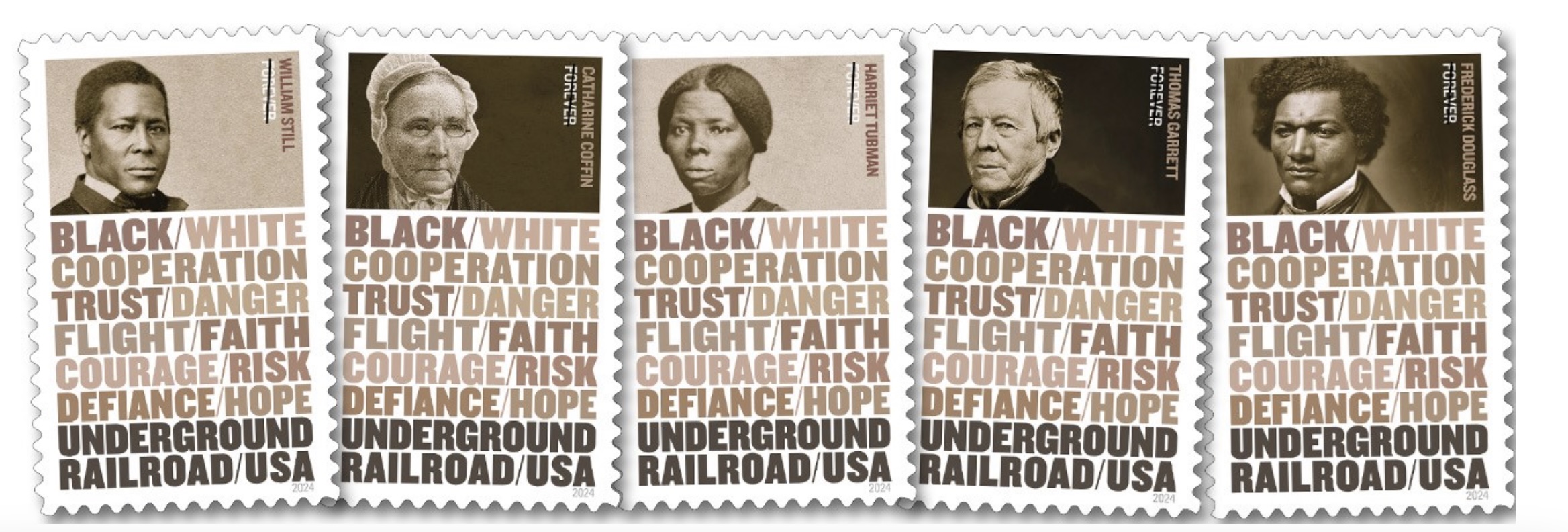
Photographs of vintage stamps of five abolitionists, two of whom are White, replaced the central figure of Harriet Tubman.
Don’t get me wrong. I think it is important and helpful to understand and recognize that non-Black people played a role in civil rights, as long it does not occlude or diminish the harsh truths of slavery and Jim Crow and the struggles of the people who endured them.
My book, Behind the Magic Curtain, was about unveiling the forgotten stories of White allies that existed alongside the civil rights movement. It was meant not as an “alternate” history but as an enrichment of our understanding of what happened. If I may quote myself:
“Standing up matters, and stories matter. Both show us what is possible, even in times of darkness.”
Although the photos that replaced Harriet Tubman’s did include her, other than the tiny inscription on the stamp, there was now no mention of her on the entire page.
Harriet Tubman was known as the “conductor” and “Moses” of the Underground Railroad. An escaped slave herself, severely injured in childhood by an irate “master,” she repeatedly risked her life by returning to the South, personally rescuing up to seventy enslaved Black people and guiding them to freedom through forests and swamps. Her amazing and inspiring story is linked unalterably to the Underground Railroad.
Or maybe not. . . .
History has as many truths as there are perspectives. I’m a writer. I get that. But I am from Alabama. I was in my forties before I ever heard of Harriet Tubman. Shame on me. But shame, also, on the educational system that taught me slaves were “happy on the plantations.”
A Park Service employee told The Washington Post that “staff members received only vague guidance and that the selections were made amid a ‘frenzy of fear,’ at a time when thousands of federal workers were losing their jobs.”
I do know that is not the way to write—or rewrite—history.
P.S. Like the previous removal of the Tuskegee Airmen and Women Airforce Service Pilots (WASPS) from the U.S Airforce training materials, the Underground Railroad web page (and Harriet Tubman’s picture) has been restored to its original state after protests. The National Park Service said the changes were made without their leaderships’ approval. The national parks and history, for that matter, belong to all of us. Our voices can make a difference.

I write about what moves me, following a flight path of curiosity, reflection, and imagination.
Feel free to explore my website and books while you are here, but if you arrived by way of my blog on Substack, here’s the way back.
If you arrived by way of the “The Stiletto Gang,” a fun daily blog by mystery authors, here is your ticket to return or explore.
Discover more from T. K. THORNE
Subscribe to get the latest posts sent to your email.


Thank you, TK, for going to the Highway 80 National Memorial and speaking about the little known 72 whites who marched in Selma the day before Bloody Sunday to support Black voting rights. I wish the Park Service had invited those of us who were the marchers that day. It would have meant so much to me and, no doubt, the others. I am surely not the only marcher who is still living.
When I was in Selma in 2019 researching my book, “Unloose My Heart,” I went to the Civil Rights museum here (possibly run by the Park Service though I am not sure anymore) and told them about the white march as they had no information about it. I left them my contact information and told them I would help in any way I could. I never heard a word.
The censorship happening is chilling. We must all push back.
Marcia E. Herman-Giddens
Marcia, I hear you. I was invited to that panel because one of the organizers had read my book and thought it was important information. The story about the 72 is documented there, of course, and it made it to al.com (through David Sher’s Comeback Town) and posting it on my blog. I think it is an important story and I will continue to tell it.
So good that your were invited! Thank you so much for continuing to tell the story of the white march.
Very interesting, TJ. On a similar note, I have pitched several non-fiction books with either Black or female lead characters but my agent reported they were all rejected by major publishers for only one stated reason: they were books with Black or female subject matter written by a White man. Well, they got me on that one. I’ve been White and male all my life. And maybe this is just the literary gods’ way of showing me what it feels like to be discriminated against based on gender or race. Anyway, thanks for telling yet another important aspect of the civil rights struggle. And doing such a fine job in the process. The more we know about the whole story, the more we realize what those who fought for justice went through.
Don, thank you for your kind words. I hate that a fine writer such as yourself encountered that. I think we are in a “swing arch” where, in an effort to recognize and respect the work of minorities, writing by “others” is shunned. I experienced that with Native American subject matter, since I am (unalterably) a southern Jewish girl of European descent and in the academic world, where Behind the Magic Curtain was rejected for having “too much original material,” which I took as code for a non-academic author. It is my hope/belief that the pendulum will return to a position where it is not the writer but the writing that matters.