Land of Ice and Fire

Last month, I promised a report on my trip to Iceland. Did not expect that they would be waiting for an imminent volcanic eruption from an area we were just visiting!

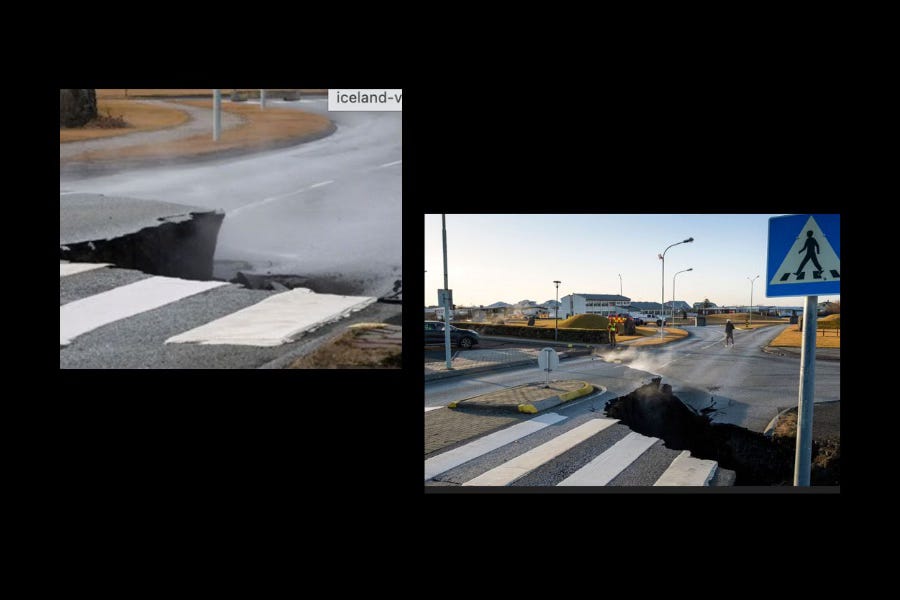
As of this post, one area has sunk and the other risen, and a crack three feet deep appeared in the road in a small southern fishing town near where weeks ago we were splashing around in the Blue Lagoon’s blissfully steamy waters. The heat rises from the volcanic activity beneath it—we just didn’t know how active!

After thousands of earthquakes, some of which were going on (unfelt) while we were there, the town is evacuated for the most part and no one knows exactly what will happen, which is nerve racking and not just for the humans. Our very wonderful guide says her dog’s name, Kivka, means magma. Kivka is very nervous and confused at having his name spoken regularly from the TV!

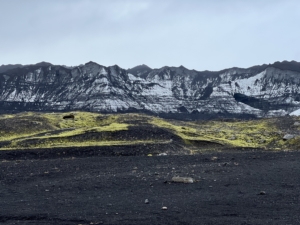
Iceland is the land of Fire and Ice, although the ice is melting fast. One glacier has completely disappeared, and others have dwindling significantly in the lifetimes of current inhabitants. This is not good news for the planet or for Iceland.

Glaciers threaded with volcanic ash

The flow of water is important to the country’s production of power (20% hydropower) and of course, their water supply. And 60% of heat is produced by pipes (insulated with spun rock), carrying water heated by geothermal energy. Geothermal energy is abundant (see paragraph one). In fact, we ate bread in one area cooked underground.

Unique technology returns carbon dioxide produced by the power plant back into the earth where if eventually turns into stone.

Most of the homes are warmed by water heated naturally under the earth. Swimming pools, as well. Where people in the U.S. might go to a bar or the gym to relax after work, heated pools are the thing in Iceland. Along our travels, I visited a heated outdoor swimming pool with four additional smaller pools, three heated to different levels, and one ice pool. (I did all but the ice pool.) A surreal experience, as it was simultaneously snowing.

I knew the Vikings named Iceland and Greenland (the truly frigid island north of Iceland) to keep Iceland free of immigrants or invaders, but I was startled by the beautiful colors and pastureland. Actually, my first startle was the alien landscape that greeted us on the way from the airport to the capital city, Reykjavík. (I still have to look up the spelling but can now spit out the pronunciation.)

The natural beauty of this land is stunning.

Iceland sits on the conjunction of two plates, the Eurasian and North American plates and on top of a “hot spot” called the Icelandic plume, a swelling of hot rock deep underground, possibly between the earth’s core and its mantle. Basically, the entire island is hardened black lava. In some places, only moss grows on the rock with an occasion mass of low blueberries (crimson in October). In other places, enough moss has grown and died to create soil, although the lava itself is poor in nutrients (unlike in other parts of the world with volcanic activity). In those places, grass grows, supporting the herds of sheep and small Icelandic horses (don’t dare call them “ponies”).

The Icelandic horse is a descendent of ponies brought from the early Norse settlers. They are a passion of the Icelandic people. Our guide owns a horse farm of forty! Tough, double-thick haired to weather the winter, they are the only horse in Iceland. Imports are not allowed in order to protect their horses from diseases, and once an Icelandic horse has left the country, they are not allowed back. All foals must have a “proper” Icelandic name and be approved by a naming council.

I had the wonderful experience of riding one (whose name also happened to be Kivka). They have five gaits, one of which, the tölt, is a four-beat gait like a Tennesse Walking Horse’s run walk.  You could indeed drink a fine whiskey at this gait without spilling a drop (unless you drank a lot of fine whiskey). Pictured below is myself on Kivka, wind blowing, hands freezing, and rain in my face, along with a gob-smacked smile that did not stop the entire two hours.

TK and Kvika

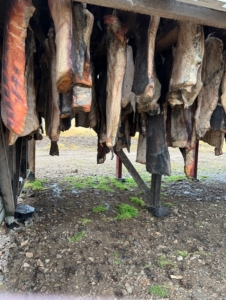
Food was delicious and … interesting. The former included a lot of fish. The latter (the “interesting”category) included traditional hákarl, fermented shark meat. It’s poisonous until it rots for about four months, during which time it gives off a strong (and I mean strong) ammonia smell. Having read a fascinating novel about a neurodiverse man who carries on the family tradition of hunting and preparing hákarl (Kalmann by Joachim B. Schmit), I braved a taste and was grateful for the shot of local spirit afterward (also traditional). I can honestly say that was a once in a lifetime experiment.

There was other excitement, like being blown several feet in a winter storm, amazing waterfalls, a crazy jeep ride along a black lava beach, and ice glaciers swirled with volcanic dust. In the middle of everything came the horrors of October 7, 2023. We had been asked not to talk politics, but the Jewish among us clung together, trying to process what we were hearing. Being so far from home made it surreal or maybe it was the stunning details that trickled in. Now, from home, we watch the war unfolding, always hoping something better will come from this pain for so many, yet afraid it is but another cycle, like Iceland’s continuous dance with death from fire.

I meant for this to be an upbeat travel piece, but it would be less than honest not to include this, as I will always remember where I was on that date. I will also always remember the non-Jewish person who broke the “rules” to offer her pain for my pain and the pain of the Jewish people. She didn’t really know me, and reaching out was a risk. Her small act of humanity eased me in a way I can’t explain. I hope it will inspire someone to reach out, even when unsure what to say. It does make a difference.

T.K. Thorne writes about what moves her, following a flight path of curiosity, reflection, and imagination.

Posted in Uncategorized | 4 Comments

Who are We?

Who are We?

Nothing was more tedious for me as a student than the requirement to memorize dates and events of the past. What’s so important about the past, anyway? As an avid reader of science fiction, I was much more interested in the future.

No one has been more surprised than I, here in the latter part of my life, that I have written two history books.

Events of the past, I have decided, are important, but they are the surface of history. Depth of understanding what happened comes with examining the people of the time, the decisions they made, the actions they took or didn’t take, and the situations/beliefs that formed them.

Events are sterile. We are hard wired to care about people. 

The people of our past are stories that we can identify with and connect to even across time. We need to understand what made them who they were. Hearing their experiences, their wisdom, and even their mistakes teach us what is important and possible. 

Women’s stories are particularly valuable because women seem to slide through the cracks of history. A circle of women in Birmingham’s 1960s braved their fears and the intense pressures of society to break through racial barriers and effect real change. They were not the power players in their world. It was (and to some extent, still is) a man’s world. Learning how they created leadership roles inspired me. Today, women are again being constrained. It is especially important that young girls, struggling to understand who they are and who they could be, hear these stories.

Both of my history books are about civil rights days in Birmingham, Alabama. Writing and researching them has changed me in profound ways I can’t articulate yet.  

But it has become too clear that I am living days that will be studied by future historians. Already, many books have been written. But the historical events and the people influencing them are still in play. And we have no idea what will happen.

Too many people have not heeded the warning that ignoring history dooms us to repeat it. That we are repeating it seems very clear.

The past is echoing.

Loudly.

Heartbreakingly.

Right now.  

Deciding who we are in this moment is difficult because things are (as usual) complicated.

But we will be called on to decide anyway. This moment is tenuous (or exploding if you live in Ukraine or the Middle East), but even here in the US, the place that is supposed to be safe and a refuge for all, we must decide who we are and who the terrorists are.

Our president recently said, “You can’t give up what makes you who you are. If you give that up, then the terrorists win. And we can never let them win.” –

So, who are you? Who are we?

PERSONAL NOTE

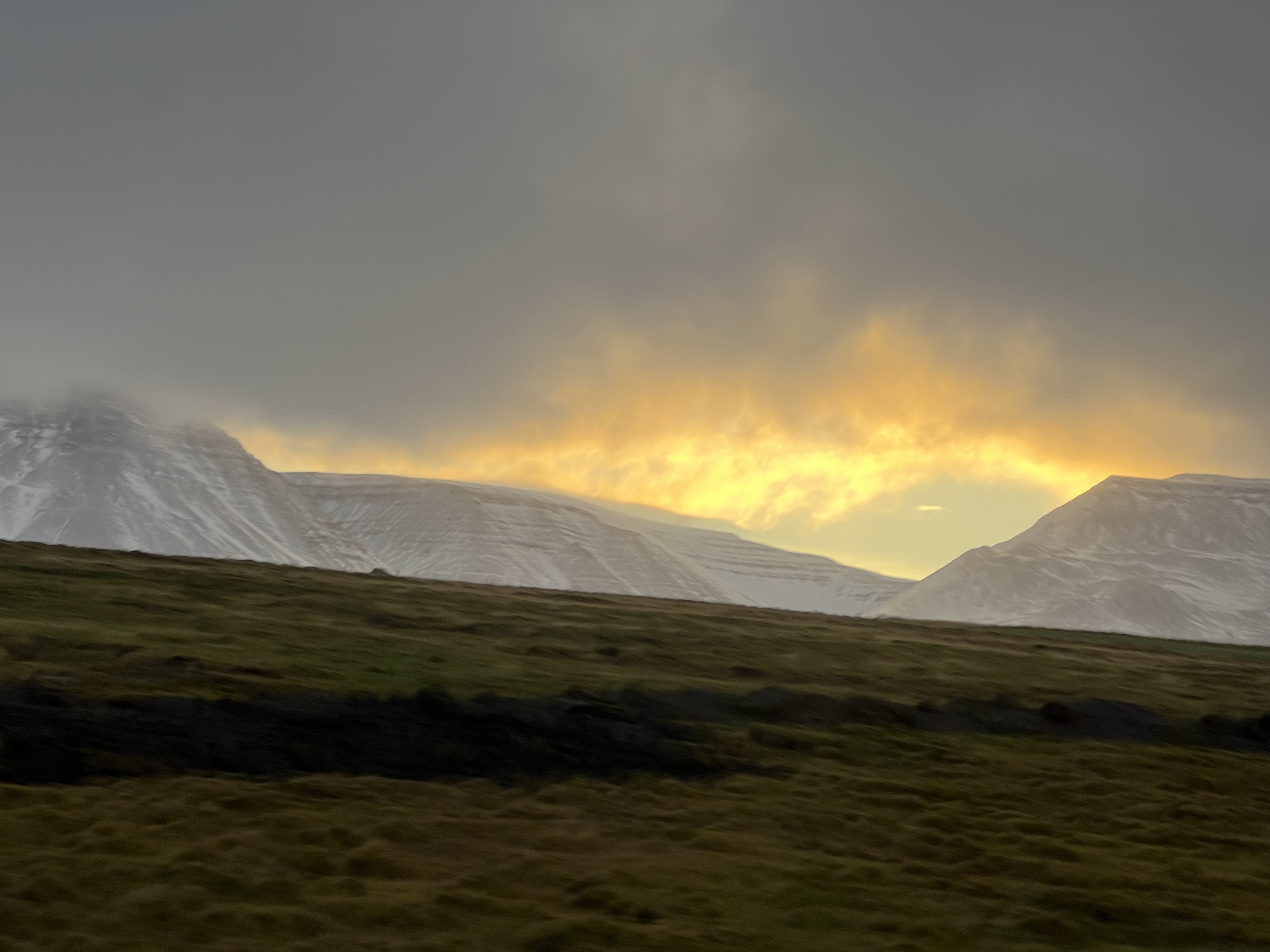
We just returned from an incredible trip to Iceland. I’ll share more later, but here is one of my favorite photos of an Icelandic sunrise.

T.K. Thorne writes about what moves her, following a flight path of curiosity, reflection, and imagination.

Posted in Uncategorized | 2 Comments

The Forgiveness of Whales

In protest of the looming rollbacks to wetland and species protections, I am reposting this today (with updates).

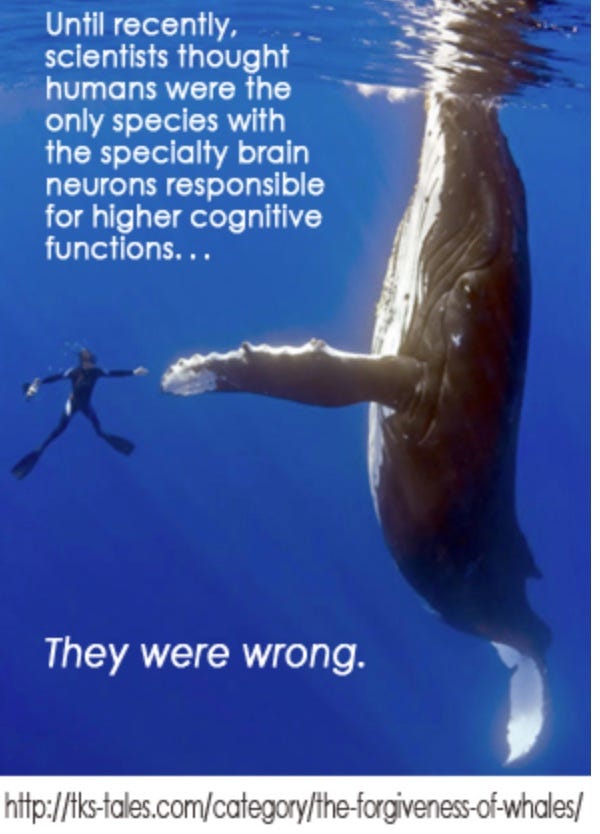
Until recently, scientists thought humans were the only species with specialized brain neurons responsible for higher cognitive functions such as self-awareness, compassion, and language.

They were wrong.

Fifteen million years before humans, whales began evolving these special glial cells, and now a strange phenomenon is occurring off the Baja coast of Mexico.

Humans have been slaughtering Pacific whales there for a long time, first with harpoons, now with sonar from Navy ships. Whales live a long time, up to a hundred years. Some whales alive today still bear the scars of harpoons. Many scientists believe that it is implausible to think that whales do not remember this or associate humans with death and anguish.

Yet, in the same area where humans hunted them nearly to extinction, then tortured them with sonar, whales are approaching humans and initiating contact. A N.Y. Times article detailed the experiences of the reporter and the stories of locals who tell about mother whales approaching their boats, sometimes swimming under them and lifting them, then setting them gently down. Almost all the stories involve the whale surfacing, rolling onto its side to watch the humans–reminiscent of the surreal moment in the movie, Cast Away, when a whale rises from the night sea to regard Tom Hanks with an eye cupped with starlight, an eerie intelligence, and a gentleness that moves us, for we know the massive creature could kill the castaway with a nudge or a flick of a tail fluke.

These real grey whales off Baja swim close enough that people invariably reach out to touch them, and they allow it. One person, reflecting on the experience, said, “I have never felt more beheld.” It seems reasonable—given the position the whales place themselves in—that they seek the contact. In many cases, a mother whale will allow her calf to do the same. There is no food involved in these exchanges, only a brief interlude of inter-species contact and rudimentary communication: I come as friend.

Why?

Where will humans be in another hundred years? I suspect we will be technologically advanced, but emotionally pretty much the same, even in a thousand years or ten thousand.

But what about a million years? Ten million? Can we evolve (if we survive) to a more sane, more rational, more loving species with a broader sense of our place in the universe and in life itself? Is it possible that these creatures with 15 million years of intelligent evolution on us might regard us as a young species, children who don’t really know better, and grant us leeway for our mistakes? Grant us . . . forgiveness?

We have a need for that forgiveness, not only for our treatment of whales, but also for our treatment of each other. We have enslaved, tortured, raped, and slaughtered each other. We have recklessly used the resources of our planet.

Yet I read about humans risking their lives to free whales trapped in nets.

People offering aid to neighbors . . . to strangers.

Teachers, nurses, and soldiers whose daily lives are ones of giving.

We have much need for forgiveness, yes, but we are capable of great acts of cooperation, of kindness, love, and sacrifice. Perhaps that is what the whales see in us when they watch us use our clever hands to free them from heavy rope nets, nets that we have left carelessly in their domain, as children leave their toys strewn across the floor.

Even whales have enemies, and they do not hesitate to defend themselves when attacked and even take the battle to the enemy. Humpbacks have been observed defending not only their own against attacks of orcas, but other mammals, other whales, sea lions, fur seals or walruses. Interestingly, they only attack mammal-eating killer whales, not orcas that primarily feed on fish.

Perhaps they understand that—like the orcas—all humans are not the same.

Perhaps they are waiting for us to become our best selves, believing, or hoping we will evolve into worthy fellow creatures on this blue-and-cream jewel that is our world.

T.K. Thorne writes about what moves her, following a flight path of curiosity, reflection, and imagination.

Personal Note:

The basis of this piece was my first blog post several years ago. It has always haunted me, and I returned to it (with modifications) to share with you. Whales and dolphins have always fascinated me. One of my very early short stories involved a young autistic child and a dolphin who connected emotionally with her.

The special cells I mentioned, glial cells, may be responsible for imagination, creativity, and probably play a role in consciousness. Einstein’s brain had an abundance of these cells, especially in the area responsible for spatial awareness and mathematics. Mice injected with human glial cells became 4x smarter. Glial cells can communicate with each other (via calcium waves) and with neurons, even signalling neurons to fire. Although whales don’t have all the “levels” of a human brain (and so their thought processes are probably distinctly different), whales have a much higher ratio of glial cells to neurons than humans in the neocortex, the area thought to be responsible for intelligence.

Even more recently, using Artificial Intelligence, scientists have evidence of a whale language and are studying it. Maybe one day we will be able to have a conversation.

Posted in Uncategorized | 7 Comments

The Lights in Our Eyes

A Note: If you are receiving this twice, it may be because I am posting it here and on another platform called Substack. (If so, my apologies and feel free to cancel your subscription to one or the other. You are welcome either place. 🙂 )

Onward.

One of my cherished and vivid memories is a sweltering summer night in my hometown of Montgomery, Alabama. Although I was too young for a driver’s license, my father—never one to let little rules stop him—was teaching me to drive. Out of the darkness ahead, a bright headlight beamed directly into my eyes, blinding me.

“I can’t see!” I shouted, certain I was going to wreck the car and kill us both.

His calm voice at my side said, “Focus on the white line on the shoulder of the road.”

To my great relief, eyeing that line kept me on the road and eased my panic. Even now, whenever I lose sight of the road from oncoming headlights or a heavy fog or storm, I remember his voice and look for that line.

That brings me to a strange something I’ve been mulling about—the fact that, although I wanted to be a writer most of my life, I never had any interest in writing about American history, much less the civil rights era, even though my family played a role in it (a subject for another post) or perhaps because of that.

Wonder Woman was my childhood hero. Science fiction enthralled me as a young person (Heinlein, Asimov, Herbert). Then epic fantasy (Lord of the RingsThe Chronicles of NarniaDune) took hold of my imagination.

I confess that I still watch Marvel superhero movies.

Ancient history was interesting, even as a youth, because it was pretty much epic fantasy, particularly the pantheon of the Greek, Roman, and Norse gods. Where do you think the comic book heroes came from?

Thor, the “real” Norse god of Thunder. Or Superman? (Hercules, anyone?)

There is a surface answer to why I wrote two civil rights era histories. In brief, a former Birmingham police officer/FBI analyst and a retired FBI agent asked me to write one of them. And four men who’d lived through the era in Birmingham and had sat for decades with the frustration of knowing important stories had been forgotten or never told, asked me to write the second.

That’s the simple explanation.

But the first book took four years and the second one, eight years. That’s a dozen years of my life. Kind of a long time for a didn’t-really-mean-to-go-there project.

One ought to self-examine.

Looking back on my life at this point, I have come to understand this: Curiosity is a major driving force of my psyche.

After contending with me in his 10th grade confirmation class, my rabbi wrote a poem in the form of Edgar Allan Poe’s “The Raven,” only the refrain was not a raven quoting, “Nevermore,” but young Teresa asking, “Why?”

I suppose I should be flattered that I merited a poem from my rabbi. My chutzpah to debate with him on God’s existence as a fifteen-year-old must have simultaneously frustrated and bemused him.

Where did that chutzpah come from?

Hmm. In large part, methinks, my dad.

How fortunate I was that my father welcomed a rousing discussion at the dinner table and beamed with pride on the rare occasion I won a philosophical point. He taught me to always question the status quo and to look for alternative solutions to problems.

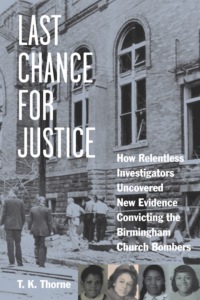
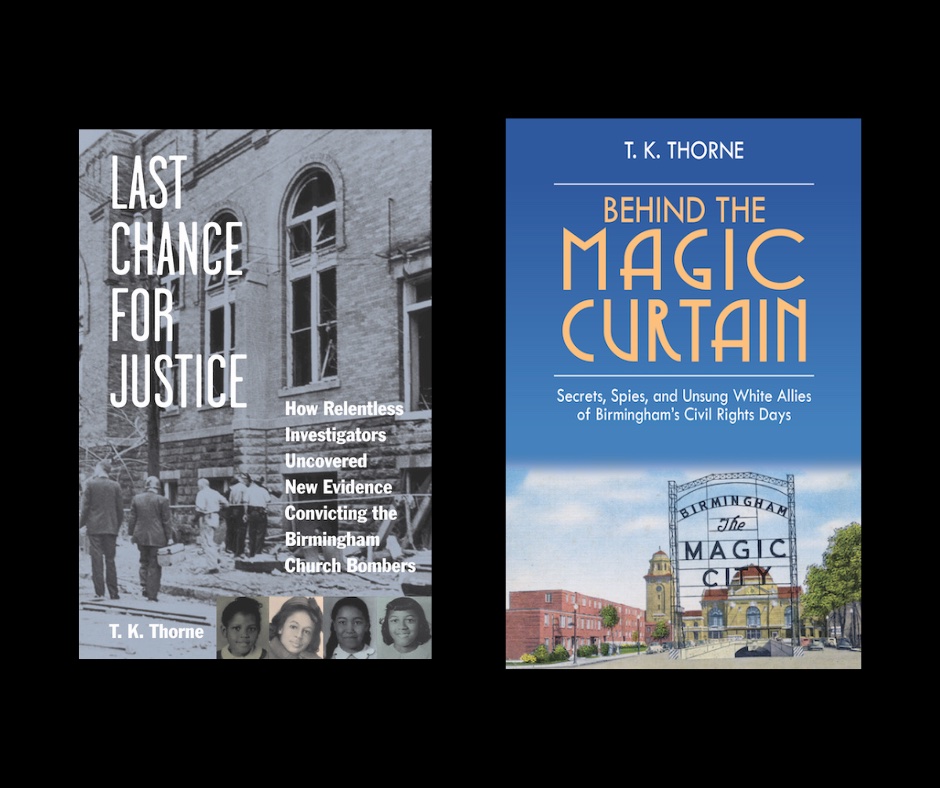
So, curiosity and the desire to tell an important story drove me to accept the challenge of writing those histories. Puzzling out a timeline and uncovering the unexpected kept me working on Last Chance for Justice— law enforcement’s behind-the-scenes tales of the investigation, trial, and conviction in the1963 Birmingham church bombing that killed four young girls and changed history.

Counterbalancing the long haul of writing Behind the Magic Curtain: Secrets, Spies, and Unsung White Allies of Birmingham’s Civil Rights Days was the joy of learning overlooked facts and ironies about a time and people that have influenced my present.

But I never considered that anything much would come of the books other than my finishing them. After all, the tomes already written on the period overflowed my own bookshelf, and those represented only a partial offering of what others had penned.

When I woke from the “coma” of writing/researching, I found, to my genuine shock, that those books were relevant. How could that be? This was history. Gone. Past.

Nope.

Faulkner said, “The past is never dead. It’s not even past.”

And Pulitzer prize-winning Alabama journalist, John Archibald, recently observed: “We’re moving forward fast. Right back to the past.”

It’s dizzying. Terrifying.

The world I have always thought of as a safe and forward-moving current carrying us toward more freedoms, more opportunities for all . . . is . . . .

At risk. Imperiled.

Where is Superman when you need him?

The headlights of oncoming nightmares are screaming in my eyes.

How do we move forward in this chaos?

I hear my father’s voice through time, as though I am still a young girl, panicked and overwhelmed.

“Just focus on the white line.”

Focus on where you are going. Write the stories you must write. Write the truths you must tell.

Thank you, Daddy.

T.K. Thorne writes about what moves her, following a flight path of curiosity, reflection, and imagination.

Personal Note:

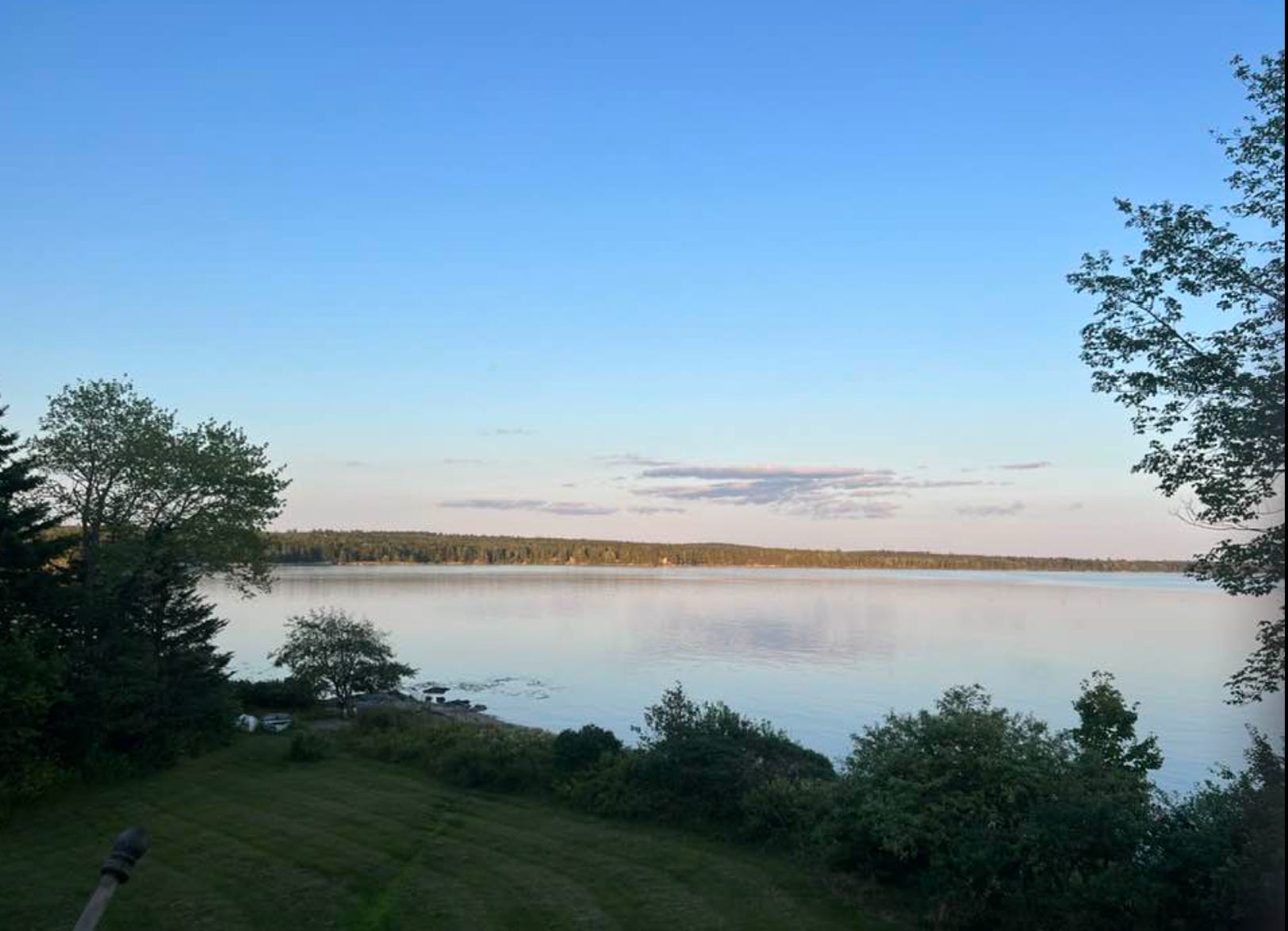
We recently returned from a trip to Maine to visit an old friend. Getting there was somewhat of an adventure as our flight from NYC was cancelled, but we got there. The air was a relief from the deadly steam bath of the South this August. Queen Anne’s lace lined the roadside, hostas were in bloom, and the sky and sea a special kind of blue. 

Posted in Uncategorized | Tagged , | 3 Comments

The Meaning of Life

When I was young, I had a deep need to understand the meaning of life. It consumed me. A knot inside that HAD to be untangled. Why was I alive? Who was I? and Why was I me?

I believed if I thought about it hard enough, I would figure it out. (Hubris, that!) I knew the answer was out there somewhere.

Adults did not seem particularly concerned about the meaning of life. How crazy was that? What could be more important? But one idea scared me more than realizing that everyone wasn’t going around absorbed by this great mystery—the fear that when I grew up, I would be like them. In my diary, I wrote my adult self a stern message, admonishing her/me against settling for complaisant acceptance.

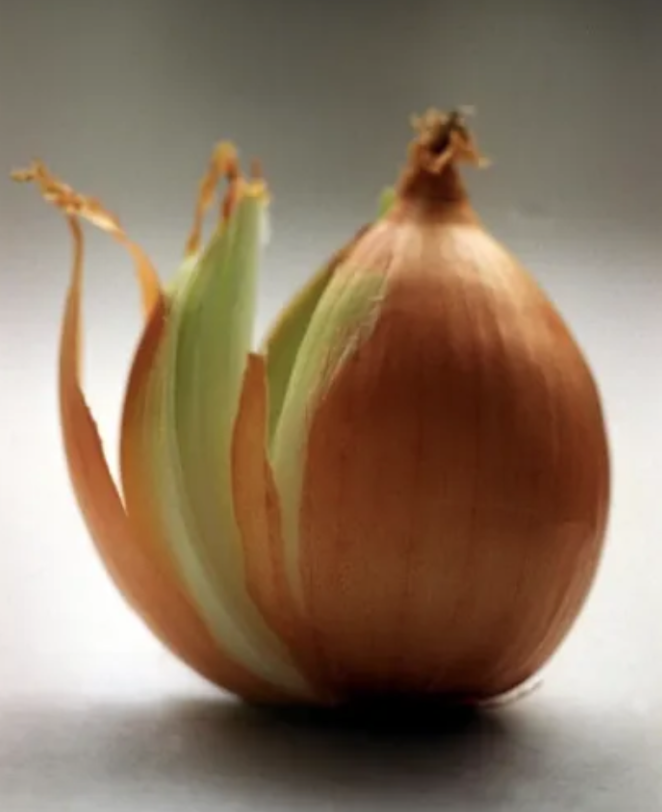
I read a lot in this quest. Alan Watts was a great inspiration and guide, giving me difficult concepts to chew on, such as the mind being like an onion—you peel layer after layer, thinking you are getting to the core, only to find there is no core, only more layers until there is . . . nothing.

I hated that. There had to be a core, a “me.” And there had to be a meaning, despite Watt’s cryptic conclusion, “This is it.”

Many people follow an ideology that journalist Derek Thompson calls “workism,” a belief that work provides one’s sense of identity and purpose. As a former police person, I get it. You put on more than clothes with a uniform; you put on an identify. Retiring, many are unable to find a center to hold onto when that layer peels off. What happens when children go off to live their own life? When a parent dies? A spouse?

Who am I, if I am not a [cop, nurse, entrepreneur, doctor, builder, artist, spouse, parent, friend, etc.]? 

I thought I had escaped that trap in my retirement because even during my law enforcement career and the one that followed, I knew my real and true self was not that work (although I did it wholeheartedly).

You see, I was a writer. All this other stuff was what I did, but not who I was.

And then I retired. I still wrote, but I wasn’t as consumed with it as I had been. How could that be if that was my true self and life’s purpose?

I was free now to pursue my art on my own terms. But strangely, other things started to take my attention, things I found I loved too. This surprised me. It challenged my perception of myself.

Who was I now? I was still determined to find out, because the answer to that question seemed entwined with the meaning of life. We need to be who we truly are. Right?

I did a lot of things. I redefined myself as an artist, a martial artist, a teacher, a very humble gardener.

But I knew I was none of these things . . . or I was all of them.

Elusive, this meaning-of-life thing. Is it an onion, after all? Are the peels just what we do?

What if I die without finding it?

What if I get old and stop doing?

In my mind, I jump ahead:

I am old. I am still. I look out on my garden and the stack of books I have written, the paintings I have painted. Remember the children I have taught. My friends are gone. Family gone, except for the young who are living their own lives.

Old. Forgotten. Maybe I am in a place where they put old people who stop doing. Now what? Who am I? Are only memories left?  Is that why old people are still?

What was my life about? Did it mean anything? Am I worthy of it if I just sit here?

Wait.

Is it possible that there is no one-size-fits-all? That the meaning of life is not the things we do, not the breakthrough understanding, not something we find at all, but something we. . .create?

Well then.

Maybe I will create a meaning right here in this moment, a meaning to breathing in and breathing out. A meaning to smiling at the cranky woman on a walker who hogs the hallway every morning. A meaning to inhaling the turned earth of the rose bed outside my window or the taste of fresh-from-the-oven bread. Maybe just remembering. What is writing at all but remembering? In the moment we pen, the moment we write about has already passed.

So maybe I will scratch out a few words with my arthritic, age-splotched hands, words on a napkin bound for the trash bin. Or maybe words that might touch another someday, a fellow human seeker looking for who they are and . . .

the meaning of life.

T.K. writes about what moves her, following a flight path of curiosity, reflection, and imagination. Read more about her at TKThorne.com.

Posted in Uncategorized | Tagged , , | 8 Comments

A Wolf in Strange Clothing

What makes a hero?

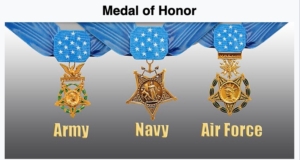
I just read about a marine who disobeyed orders and moved into the line of fire to rescue his fellows. He saved several lives and received a Medal of Honor.

That’s a hero, for sure.

Just the fact that he endangered himself for others is heroic. But strangely, the “disobeyed orders” part feels like icing on the cake. We admire him even more.

Which is interesting, because if we tweak the story so that he disobeyed orders, but failed to rescue anyone or even endangered or brought harm to others, we might call him a fool. He might be court-martialed instead of honored.

Conclusion: Social approval is situational. If George Washington had failed to win the day, we would all be British colonists and calling him a traitor.

But why does disobeying orders in a “winning” scenario stir our admiration?

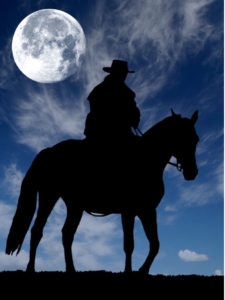
Because our culture preaches independence. We worship the John Wayne/Clint Eastwood cowboy, alone on the range, needing no one, the thinker/doer who doesn’t give a rat’s hinny what others think of them, the rebel who fights against the system.

Speaking generally, we in the West are prouder of our successes, more focused on personal growth, and less connected to the people around us than other cultures. (The older I get, however, the more important those connections are.)

Other cultures, especially in the Middle and Far East, don’t worship individualism the way we do. They value their entwinement and interconnections, the group over individualism.

One way is not superior to the other. Different cultures emphasize different values, but—

I wonder if Western “individualism” might be more of a thin cultural overlay. Group-think sways us more than we like to believe. In fact, we are daily witnessing group-think in the wolves’ clothing of individualism. 

Many define freedom as individualism, choosing our own path, having control of our own destiny. It’s a founding reason for America’s existence.

But history has revealed it is far more complex than that. One person’s freedom is another’s prison. Since the penning of the Amendments to the Constitution, debate over the scope and meaning of “freedom” has continued.

For all our focus on behaving independently, we forget we are hard-wired to care about what others think.

Why? Because we evolved in small groups where being ostracized meant death. A person exiled from the group could not survive in the harsh world of lions, tigers, and bears.

I have to wonder if the tsunami of group-think-in-the-name-of-individualism sweeping our world got switched on because social media presented the reality (or illusion) that a large group of people think the same way. Thus, making it “safe” to move toward or to voice views that would have been anathema a decade ago.

We need our heroes because they are, in essence, stories about who we want to be and who we want our children to be.

But we might need to look closely at how we define them.

T.K. Thorne writes about what moves her, following a flight path of curiosity, reflection, and imagination.

Posted in Uncategorized | Tagged , , , , | 3 Comments

A.I. and I

Artificial Intelligence (while not yet self-aware) is here, now. Much ado is made of AI these days with the public emergence and access to a chat program called ChatGPT. I couldn’t resist “chatting” with it myself. 

Impressions:

  • Impressive
  • Scary
  • Exciting

As a writer, I was curious about its abilities, and I was also really tired, so I asked it to write a blog about AI (this is not it), which it did. It was fairly stilted and boring. Then I asked it to write the blog in the style of TKThorne.com. (Yes, that felt weird.) 

It rewrote the piece, and it was a bit more interesting, LOL.

Then I started looking at some of the collaborative art that has been done with AI, and I realized how exceptionally good some of it is. I began to get depressed about what the point of doing anything was when AI will soon do it so much better and faster. (I am not the first person, nor will I be the last, to think this.)

AI can already paint far better than I can. At some point, it will write stories better. It will sculpt better than any human artist, take better photographs, etc.

I had an existential meltdown. What is the point?  Why strive if AI will just do it better?

Deep into my melancholia, a thought gave voice.

“What is it?” I asked, irritated at being disturbed from my funk.

“Is that why you paint?” the voice said.

“What?”

“Do you paint because you want to produce something better than Monet or Rembrandt?”

“Of course not. I just want to express myself.”

“And you write because you want to be better than Shakespeare?”

I snorted. “I see your point.”

“Do you? Well, in case you didn’t, you write because—?”

“Well, why do I write?”

An inner shrug from the voice, perhaps a little piqued that I turned the question back on it. “I don’t know, actually. You just must—?”

“Must what?” I demand.

“Create.”

“But what if I struggle and sweat while AI writes it all out in seconds?”

“What of it?”

“Nobody is going to want my books, that’s what of it!”

“So, [dripping with sarcasm] you are worried that you might not sell a million copies of anything with AI in the picture? Like you are selling a million copies now?”

Ouch.

The relentless voice [a little kinder]: “If another writer writes something awesome, does that lessen you?”

“No, I mean, well maybe I am a little jealous . . . for a couple of minutes.”

“And then?”

“I’m happy for them and grateful for having had the chance to read their work and learn from them. There is room for all creative voices.”

“But not for AI—?”

“I . . . guess it would have a right to a voice. I should learn from it?”

“Why not?”

“Yes…why not?”

Several very smart folks are worried about something called the “singularity” (a reference to the point at which a black hole forms and a cascade of effects takes place.) The singularity is a theoretical point after AI starts improving itself when it reaches superhuman intelligence it, and we become unable to control it.

What happens then?

No one is sure, but at that point it is called AGI (Artificial General Intelligence), and one of these scenarios is possible:

#1 AGI determines humans stand in the way of its goals and proceeds to wipe us out (ala Skynet of Terminator).

#2 AGI ignores humans and goes about whatever it wants to. (Until humans decide to try to pull the plug, in which case we have defined ourselves as “in the way” and back to #1.)

#3 AGI puts up with the trauma and panic from #1 or #2 and partners with humans to create a better world.

I have no idea. 

But I am very curious.

If AGI wipes out humanity, I won’t be worrying about competing with it. If it goes about whatever it wants to, ignoring us—well, who knows what it will “want” to do. It’s interests may or may not include art. And if AGI writes better than I do, I will keep creating, because it is part of my nature, and I’ll look forward to reading its blockbuster.

T.K. Thorne writes about what moves her, following the flight path of curiosity, reflection, and imagination.

Posted in Uncategorized | 15 Comments

When Will We Learn?

It felt like a blow—what the woman beside me was saying.

Questions flicked through my mind: Was this what happened? How could I not remember that? Why did I not remember what had triggered the entire thing?

Circa 1980:

My partner and I went into a well-known restaurant in Birmingham, Alabama to eat dinner. We were working the Evening Shift (3-11 pm). Though we were both young female officers in the Birmingham Police Department, the shift sergeant had put us together to work a beat that included two housing projects, a couple of fast-food joints, and one “nice” restaurant—the one we walked into.

The number of females and the number of black police officers were small. My partner was a member of a smaller demographic as a black female officer. I was a minority of “one” as a Jewish police officer, evidenced by my engraved name tag.

My religion was not something I spoke much about, unless someone asked a question. Thankfully, I never encountered direct prejudice from fellow officers about it. Dealing with being a rookie and a female rookie was enough. But that is another tale.

This story began when we entered the restaurant and sat at a booth. One of us took the portable radio from her gun belt and placed it on the table, as was customary for uniformed officers when eating. The man in a booth behind us twisted around and asked if we could turn it off. I replied we would turn it down and did so. When he repeated his request, I explained we had to keep the radio on in case we were called or there was an emergency we needed to respond to. Again, we adjusted the volume as low we could and still hear it.

This did not satisfy the “gentleman,” who stood and snarled at us. 

I have always remembered what he said as being something that included the “N” word; he got loud in the restaurant with his remarks; and we arrested him for Disorderly Conduct or (possibly) Public Drunk, not without some trouble. After being told he was under arrest, he became passive-aggressive, sitting down again in the tight booth and refusing to stand up. It took several officers to carry him to the police car.

Forty-plus years later at a retired female officers’ luncheon, I sat next to the woman who had been my partner that night, the first time I had seen her since those days. She told me the story as she remembered it. Her recollection, though similar in the basics to mine, contained a particular addition that stunned me. After twice requesting that we turn off our radios, the man stood and said, “What do you expect from a ‘N-word’ and a Jew?”

She threw the contents of her salad bowl at him.

I don’t know and didn’t ask if the lettuce connected, but I assume (and hope) so.

Apparently, he had spoken loud enough that others heard him and, according to my partner, something like a bar brawl ensued, with people taking sides, and I called for backup. Several went to jail. In court, the judge required him to make contributions to a charity of our choice (a unique sentence, but one that seems aligned with the principles of justice).

What disturbs me is not that I forgot many of the details—I have forgotten way more than I remember about the past—but that I forgot the “. . . and a Jew” part.

Did I just pass it off as a drunk idiot, and it faded from my mind? This seems odd, since I distinctly remember the first and only time someone called me a “kike” (a derogatory slur for a Jew) in middle school. It stunned me. It is one thing to know intellectually that some nebulous people hate you, another to hear it from the mouth of your peers.

So why did I forget?

I don’t know the answer. But I know that anti-Semitism has increased 500% over the past decade in the country I call home. And it is still on the rise.

And that makes me profoundly sad . . .  fearful . . . and angry at those who spew hatred and spread conspiracy lies that have roots hundreds of years old.

I have researched and written about the Civil Rights days of my city. I know that the movement for Black rights—to vote freely, to sit in the restaurant of their choice, to go to a school with White children, etc.—was decried as a “Black-Jewish Communist Conspiracy.”

Blacks and Jews have their own stories, their own histories, but we are particularly linked. 

In a deeper sense, the entire human race is linked. As Dr. King wrote from the Birmingham Jail in 1963, “Injustice anywhere is a threat to justice everywhere. We are caught in an inescapable network of mutuality, tied in a single garment of destiny. Whatever affects one directly, affects all indirectly.”

And from a song of my youth: “When we will ever learn? When we will ever . . . learn?”

T.K. Thorne writes about what moves her, following the flight path of curiosity, reflection, and imagination.

Posted in Uncategorized | Tagged , | 29 Comments

Three

Three is a magic number.

Can you hear your mother counting down the time left until unnamed but dreadful forces will compel you to do what you haven’t done yet? Your personality might have made you immediately hop to at “1.” Or (like me) you might have waited until the last possible moment before her lips formed that dreaded last number—

—Which was, and will remain for all time, the number three.  “1 . . . 2 . . . 3!”

Never has a mother anywhere given four seconds or five.

Similarly, everyone engaged in moving something heavy, hoists together, not on “1” or “2,” but “3.” Without argument or consultation, “heave” happens on “3.”

Goldilocks is confronted by the three bears with their three bowls of porridge at varying temperatures.  Only with the third does she find the perfect one.

The very bad wolf huffs and puffs and blows down two of the pigs’ homes before being foiled by the solid brick structure of #3.

The prince makes two failed tries up the ice mountain before rescuing the princess on #3.

Two of Cinderella’s sisters fail at getting their hefty feet into the glass slipper, but on attempt #3, Cindy slips it gracefully on.

Three is a triangle with three points and three sides. The formula for a right  triangle is the basis for the pyramids of Egypt.

For Pythagoras, famous ancient mathematician, the number three was the key to all the hidden mysteries of the universe.

Isaac Newton: The Three Laws of Motion

Isaac Asimov: The (original) Three Laws of Robotics

No artist would be happy with two elements in a grouping.

Three is:

  • the family—mother, father, and child;
  • the Three Wise Men who visited the infant Jesus (with their three gifts);
  • the Holy Trinity—Father, Son, and Holy Ghost; and
  • the three primary gods of Hindu mythology—Brahma, the creator, Vishnu, the keeper of reality, and Shiva, the destroyer.

The multiples of 3 come up 3 times in each set of 10 (3,6,9, etc.) And 3 x 6 (another multiple of 3) is 18, a special number in Judaism.

All of life depends on three types of molecules—DNA, RNA, and proteins. The structure of DNA is made of three combinations of molecules.

All this “three” stuff began when I randomly noticed there are three beautiful shells in my home that are special treasures.

One, from a dear friend, lives in my newly created little pond, nestled among stones and an old water pump.

One was a spontaneous gift from a Bahamian woman I met years ago in her little island home, who told how she had almost drowned at the age of 84 and had to swim two miles in the strong currents to survive.

The third shell is the one that sat on the glass top of my grandmother’s porch coffee table for most of my early years of life. I never failed to lift it to my ear when I visited Granny, listening with wonder to the mystery of the whistling wormhole to the sea.

So, that led to the ruminations on the magic number three, which is imprinted into us, perhaps in our cells, and which every writer worth her salt knows is important in telling a satisfying story.

T.K. Thorne writes books that take her wherever her imagination flies. 

Posted in Uncategorized | Tagged , , , , | 5 Comments

When Walls and Water Speak

One day, I looked at an area along the brick walkway in the front of my house and realized I needed to do something extreme. Despite having spread grass seeds more than one season, only weeds grew in the shadow of a magnificent weeping yaupon that arcs over the sidewalk and shades a crescent-shaped area.

I looked at it with despair.

(How many times have I looked at a blank page without a clue what words to paint on it?)

Suddenly, I saw a garden in that crescent-moon space. In a previous post, “Goddess in the Garden,” I wrote about its transformation into a moss-garden.

But nature had other ideas. When it rained, water caught in the yaupon’s draping branches, streaming down them in torrents that hit the ground and tunneled trenches into my creation.  

(How many times have the words I carefully crafted looked very different when I returned to them later, requiring I rewrite them or throw them out altogether?)

I tried to repair the craters, but each time it rained, the holes and mini-gullies returned. The space was not happy. I was not happy. But I had put in so much work!  

It was not fair.

I grumped. 

And repaired what the water had torn up.

Until it rained, yet again . . . as it is wont to do. And again.

Finally, I surrendered.

“What do you want to be?” I asked my garden.

(Once, I wrote about a blank wall speaking to me, eliciting mockery from a local radio host, but the wall wanted something, and I listened.)

“I want to be a pond,” my garden said. “I want the water.” 

“What about little rocks?” I mused. “Can’t I just put pebbles down where the water flows?”

The garden’s reply was a definite, “No.”

So, I began to dig. It hurt to dig up what I had painstakingly planted, what was beautiful just as it was, for something new.

(How many times do we have to start over in our lives, to force open scars, so new love and light can enter?)

I dug for days. Frogs came to visit.  One cutie in particular dove into my hole on three occasions, probably looking for a place to hibernate for the winter. I took him out each time and asked him to be patient.  

Finally, the hole was done…I thought. Then came the Plastic War.  Instructions on lining the pond sounded very simple.  

Not.

One of our horses, who should be named “Curious George,” made an appearance to help out, but alas, was not equipped. Hubby helped of course, particularly with the large rocks I coveted. It was a great feeling when they settled into place! 

The rocks came from the streams and creeks on our property. My husband became accustomed to having his truck appropriated for rock gathering expeditions.

My fear was that the black lining would show along the steep sides in the deep end. I had never done anything like this and had no real plan other than the foundation rock placements.

(How many times have I started a book with only a few words, just a sketchy idea of my characters, and no idea what happens next?)

I tempted the creative muse yet again with my crazy pond idea. Yet, she didn’t fail me. 

As I worked, I realized the edges of the stones placed on edge along the bottom provided a shelf for another layer and so on. Each stone had to be fitted for shape and stability. They let me know when it wasn’t the right place for them.

When I thought I was finally finished, the water said I was not honoring its flow, and I had to tear up and redo a section. 

It is the middle of winter. The plants I tried to save are hopefully sleeping. Some of the moss is thriving, even in the cold. The water is happy, flowing as it wanted to all along. The garden is something very different than it was and yet the same.

Isn’t that so of us, as well?

Every moment we are different, a memory of all the moments before spun into the illusion of a constant, just as the garden changes every moment—as water swirls, plants grow and rest, leaves fall and change form. Every morning when I visit, I and the pond are new and old. Sometimes I change it by way of a rock that needs adjustment, a tuft of moss to add, or a new idea of where a gift of crystal should nestle. 

Sometimes I just breath in the peace of it.

(The tales I’ve told don’t change once they are printed, yet each time a reader opens the book, they come alive, changed by the perspectives and person who recreates them from a few words. The stories are the same and yet different, a joining of imaginations—theirs and mine.)

I am looking forward to the spring when I hope my frog friend will return.

Update: Here is the pond in spring.

Posted in Uncategorized | Tagged , , , | 20 Comments