I didn’t know that I needed to go to Africa.
When a friend asked if my husband and I wanted to go, I started to respond, “No,” but the word caught somewhere between apprehension and . . . something else:
I am generally healthy but in my eighth decade. A visualization of my future self on my deathbed—an inevitability that now looms—appeared and suddenly I realized that I did not want to die having never experienced the birthplace of humanity, a place where exotic animals I had only seen in zoos lived in their natural habitat. And the Great Migration of wildebeest was happening!
The trip was expensive, but after some intense financial figuring, we decided to go—a decision that did not stop my imagination from auditioning every possible reason to stay home.
The first “what are we thinking” moment occurred shortly after our commitment. We started watching the TV series 1923, a Yellowstone prequel set primarily in Montana. But it unexpectedly begins in Kenya, one of our African destinations. In the first episode, a leopard kills a woman who leaves her tent in the night to relieve herself. (Did I mention I was in my eighth decade? If I sleep through the night without such a trip, it is a miracle.)
Our itinerary called for three nights in a tent. As I watched the leopard drag the woman’s limp body to a tree, I started thinking—how did one use the facilities in the middle of the night on safari? Someone who had been to Africa reassured me that a guard with a “strong flashlight” would accompany one at night.
A strong flashlight?
The next “what are we thinking” moment occurred during our visit to the travel doctor to receive the shots we needed, particularly Yellow Fever, which is a requirement for entry into Tanzania. “This is a live virus,” the doctor counseled beforehand. “There is a 1 in 250,000 risk of serious permanent brain or liver damage.”
I sat up in my chair.
“And that risk,” he continued, “rises to 1 in 50,000 for adults over 60 years old.” (Did I mention I was in my eighth decade?) “Death” came into this monologue somewhere, but he had me at “permanent brain or liver damage.” I looked at my husband, eyes wide. “Should we reconsider this?”
I ended up taking the shot and did not have brain or liver damage (that I know of) … or die. Not yet, anyway.
Then the Big Worry hit: an outbreak of Ebola in the nearby Democratic Republic of the Congo and Uganda. I have been terrified of Ebola since reading The Hot Zone (1994). The fictionalized movie version—Outbreak—didn’t help.
We were informed by the travel agency that they were not canceling, and if we did, we would lose what we had paid. Also, we learned that exposed citizens would not be allowed back in the U.S. What did that mean? If Kenya or Tanzania got cases, would we be considered “exposed”?
We could be trapped in Africa. The Dark Continent.
After much angst, many conversations, and careful monitoring of the outbreak, we decided, like any insane person, to go anyway. After all, we had a Great Migration to catch!
We landed in the middle of the night, of course, but we made it to the far side of the Atlantic. Bring on the animals!
But I had much to learn, and not all of it was about Africa’s fauna.
On our first day, we explored some of Nairobi. I noticed people, mostly men, sitting on hillsides paralleling the road. They seemed to be mostly alone, or sometimes with one or two others. I asked our delightful guide, Wally, what they were doing, wondering aloud if they were homeless or if something was wrong. He shrugged. “They are just sitting.” Seeing the confused look on my face, he added, “thinking about life or resting. Maybe they are on their way somewhere. Many people here walk everywhere they need to go.”
It took me a while to absorb this because I reflexively see the world through Western culture, a culture that does not much value “sitting and resting and thinking.” But as our adventure unfolded and inevitable stresses arose over changes, confusion, or difficulty, I watched Wally respond with an open smile and a cheerful, “Hakuna Matata!”—meaning “There are no troubles; no worries”—and then calmly solve whatever needed solving. (You may remember this as a song in Disney’s The Lion King.) I began to understand that the phrase was not a dismissal of problems but a different way of seeing them.
Leaving Nairobi, we drove to our first destination on one of the many rough roads. In a continued lesson in perception, Wally explained “TIA.” TIA is not to be confused with “Transient Ischemic Attack”; it is shorthand for “This is Africa.” TIA: Potholes and rock-strewn roads aren’t difficulties to be endured; they provide an “African massage.” Everyone’s smartphone registered thousands of steps as we jostled along getting our massage. I maintained it really was a workout, as all our core muscles were engaged to keep us sitting upright.
The long hours in a plane and the “massage” melted away as a towering giraffe, only yards from our vehicle, stopped eating and stared directly at us. It was a magical moment, a you-are-really-here moment.
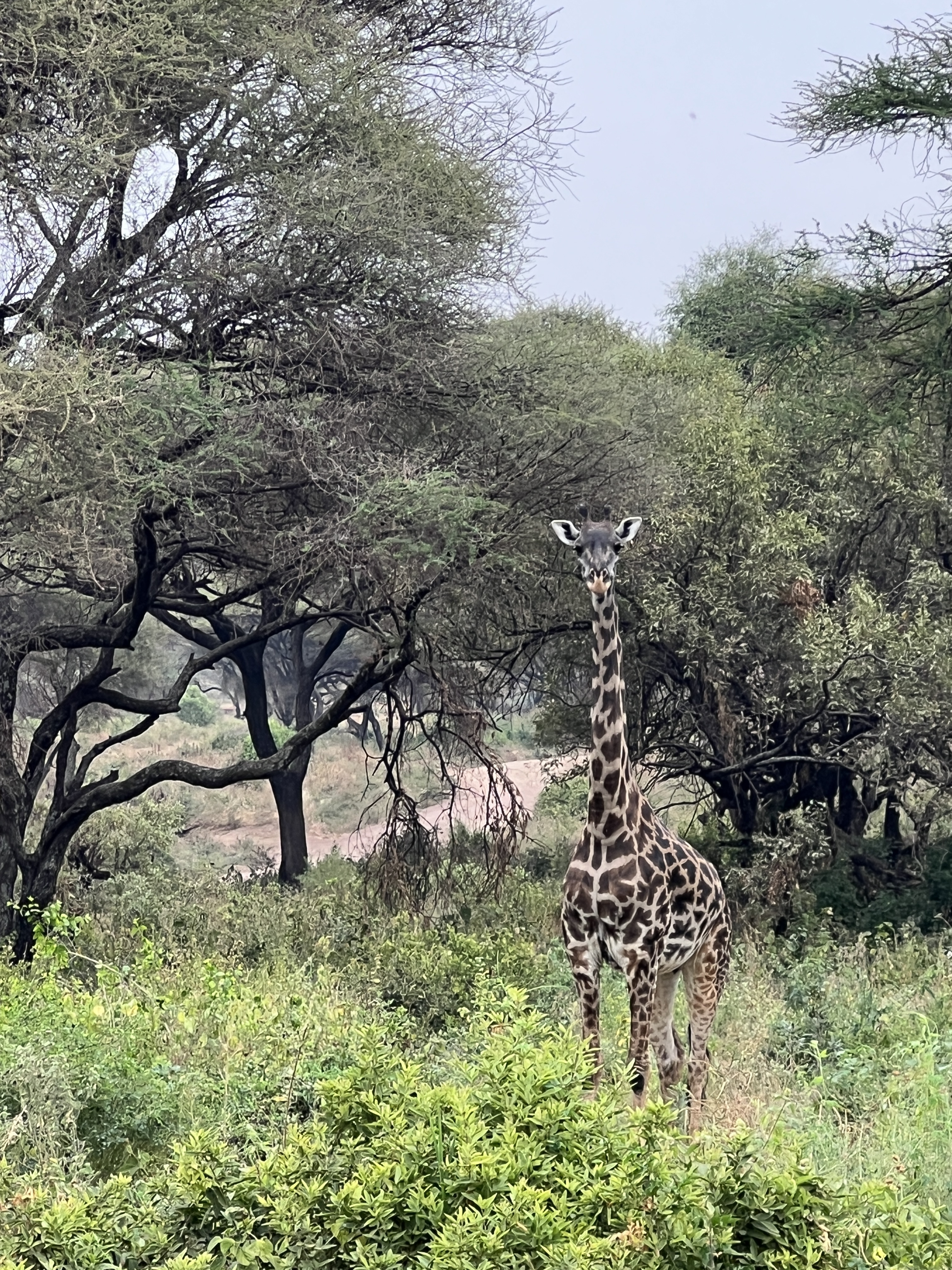
Over the next couple of weeks, there were many such moments. We traveled to various lodges and took twice-daily drives from each location out into the wild, sometimes into a jungle-like environment, where we were treated to close-up encounters with more giraffes and the smaller elephant species that is among the most at-risk mammals on the planet, threatened by extensive logging and ivory poaching. It made my stomach clench. We were on a viewing-photography safari, of course. I took plenty of photos, but after a week, I found myself leaving most of that to my talented and well-armed husband, whose arsenal was camera equipment. I just wanted to be present.
We went most often into the savannahs (the Ngorongoro, Serengeti, and the Maasai Mara)—vast plains of tall gold-green grasses or scrub grass deserts, with occasional umbrella-top acacia trees silhouetted against the horizon or mountains. I kept gazing out at the landscape, telling myself—I’m in Africa!
I had the opportunity to stand on the plains a couple of times. It was a moment akin to encountering the horizon above the ocean for the first time, only the view was 360 degrees. Wind blew in constant gusts. The landscape looked deceptively devoid of life, but a lioness could be crouched a few feet away in the tall grass, waiting. Was this what my far distant ancesters who evolved here felt? A heady mixture of fear and exhilaration?
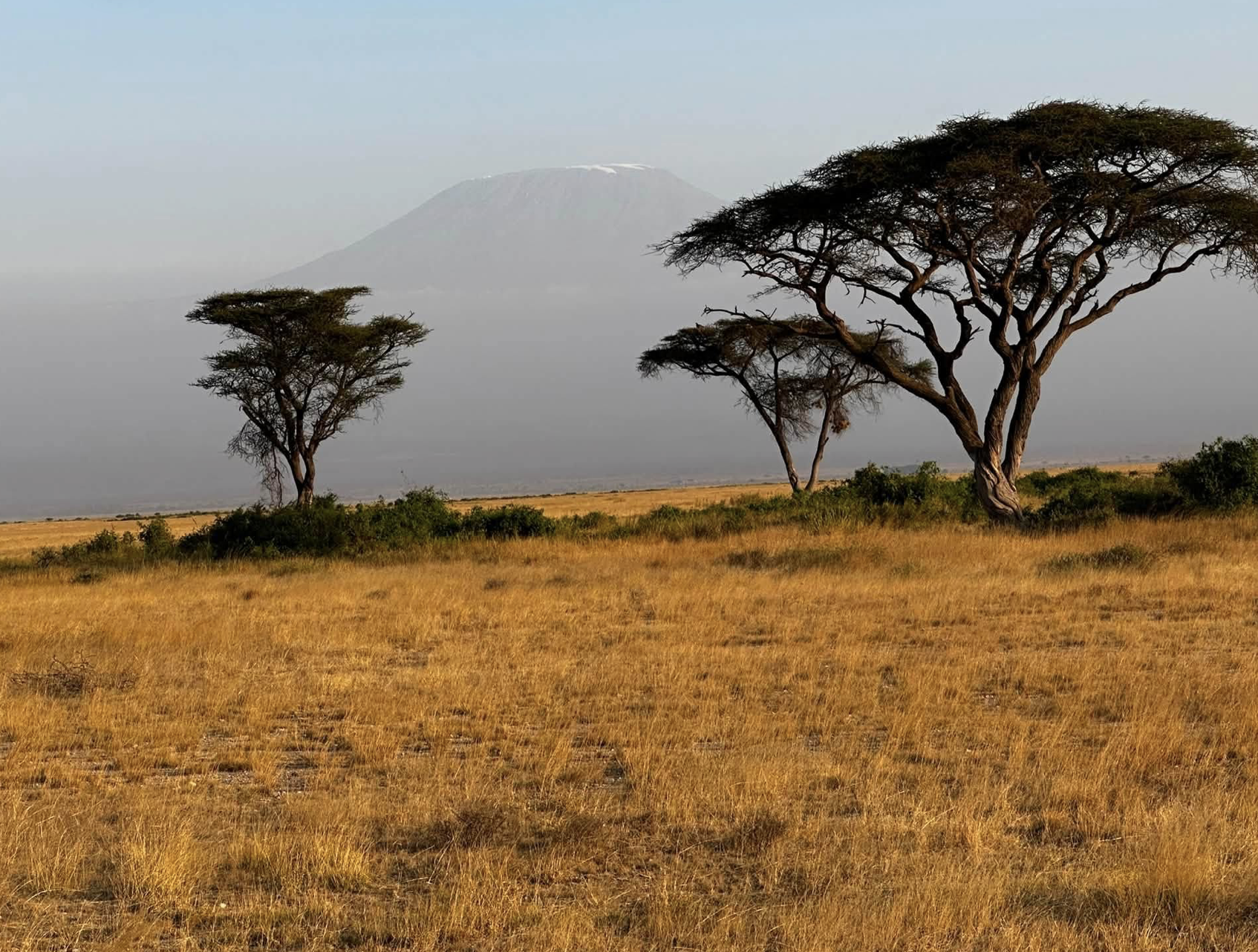
Photo Courtesy of Roger Thorne
Magical moments kept happening.
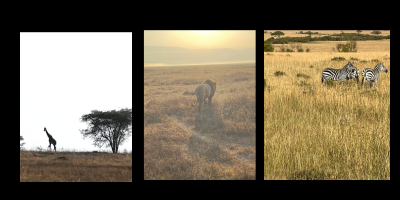
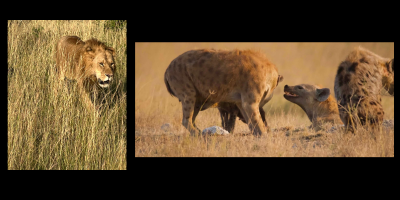
Out of the unending grass plains, creatures would suddenly appear—birds feathered in water-colored designer attire, baboons, monkeys, a herd of striped zebras, the stunning silhouettes of giraffes, a pacing male lion, a strutting secretary bird devouring a snake, a family moment with a couple of hyenas and their cub, the so-bizarre-it’s-cute warthog that has to kneel to eat. And everywhere were the small, graceful gazelles and their larger cousins, often looking as if Dr. Seuss had assembled them—wildebeests, impalas, topis, hartebeests, and the diminutive, long-snouted dik-diks.
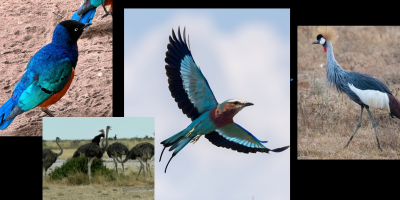
Photos courtesy of Roger Thorne
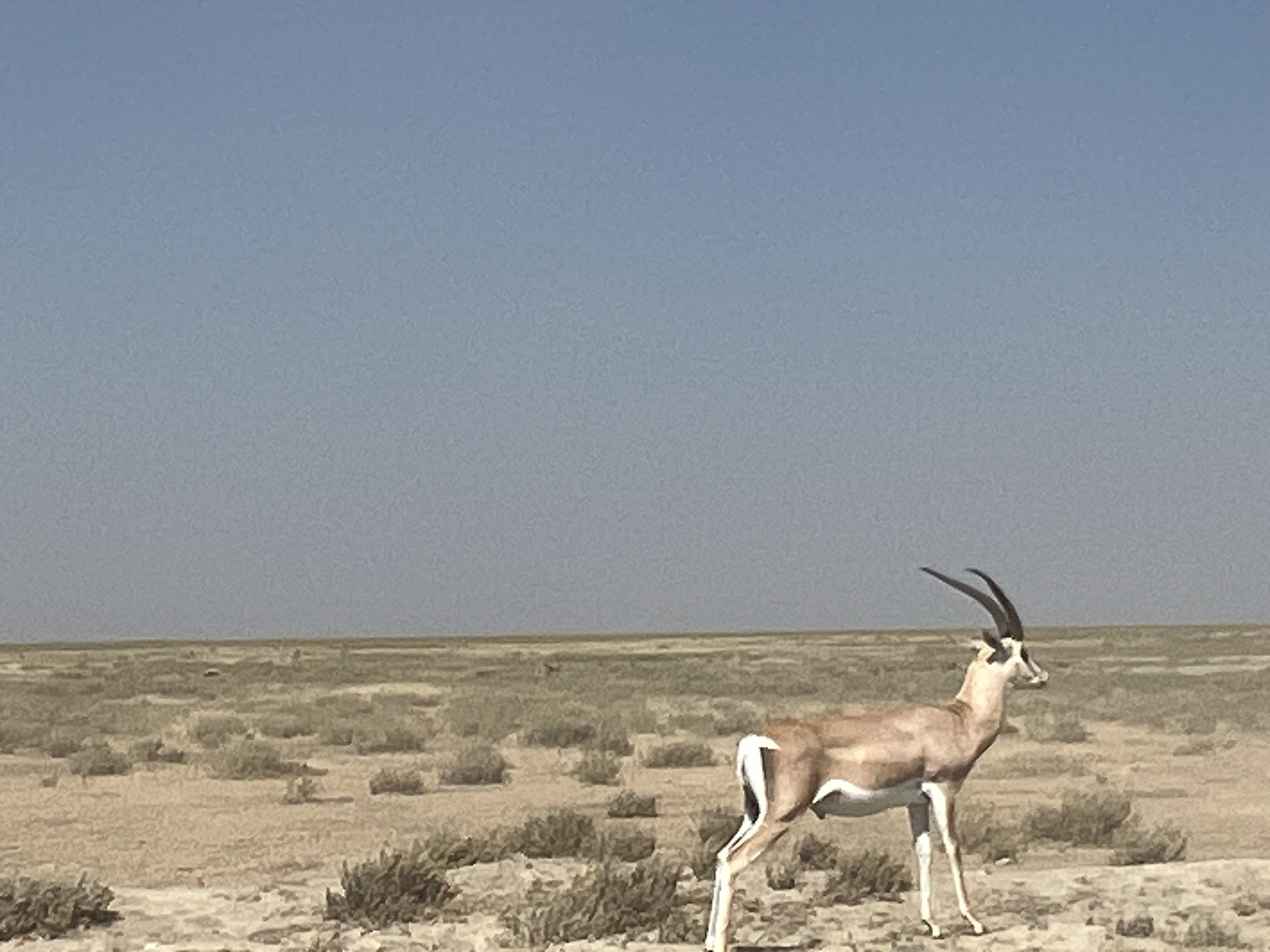
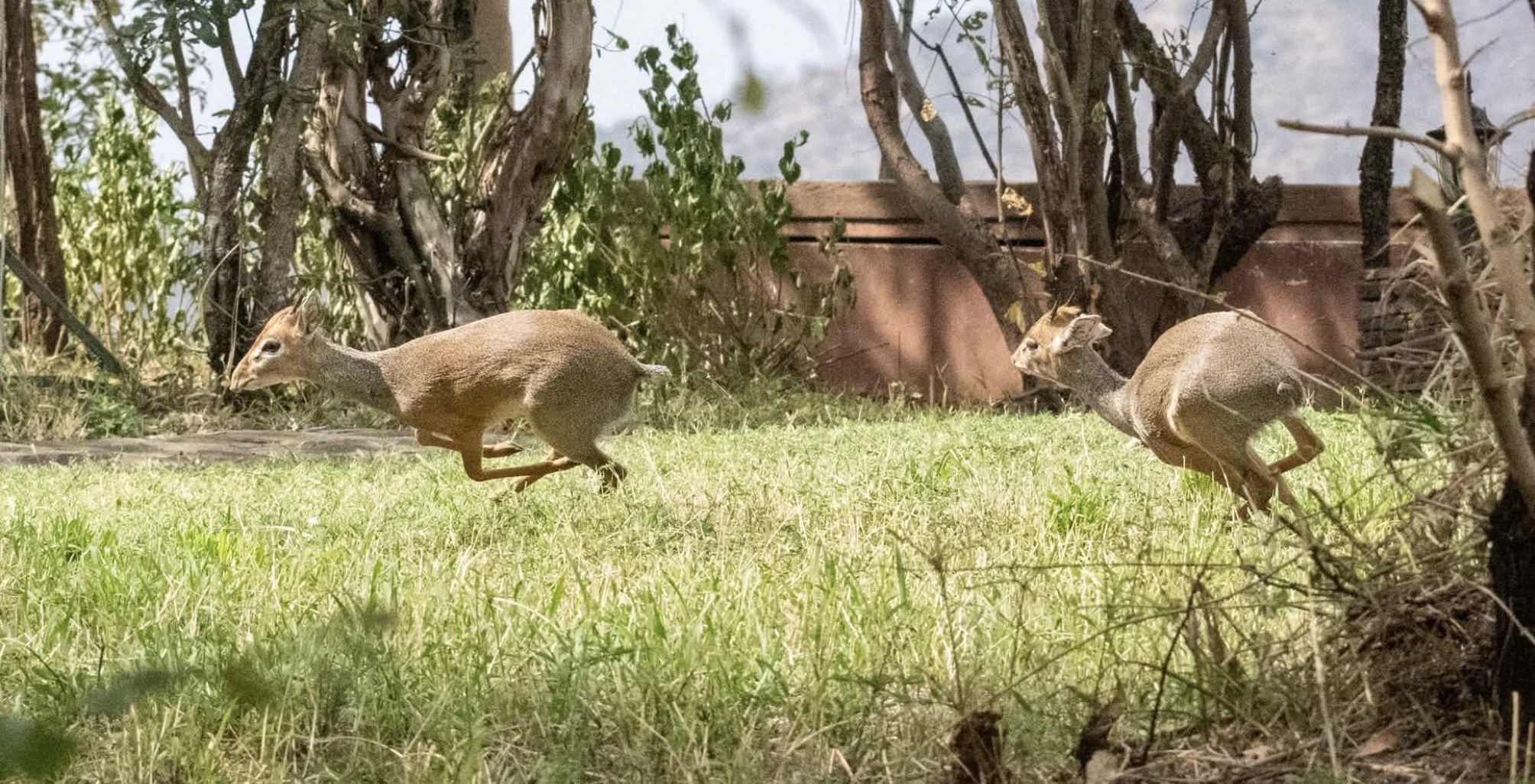
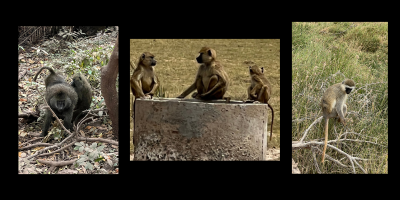
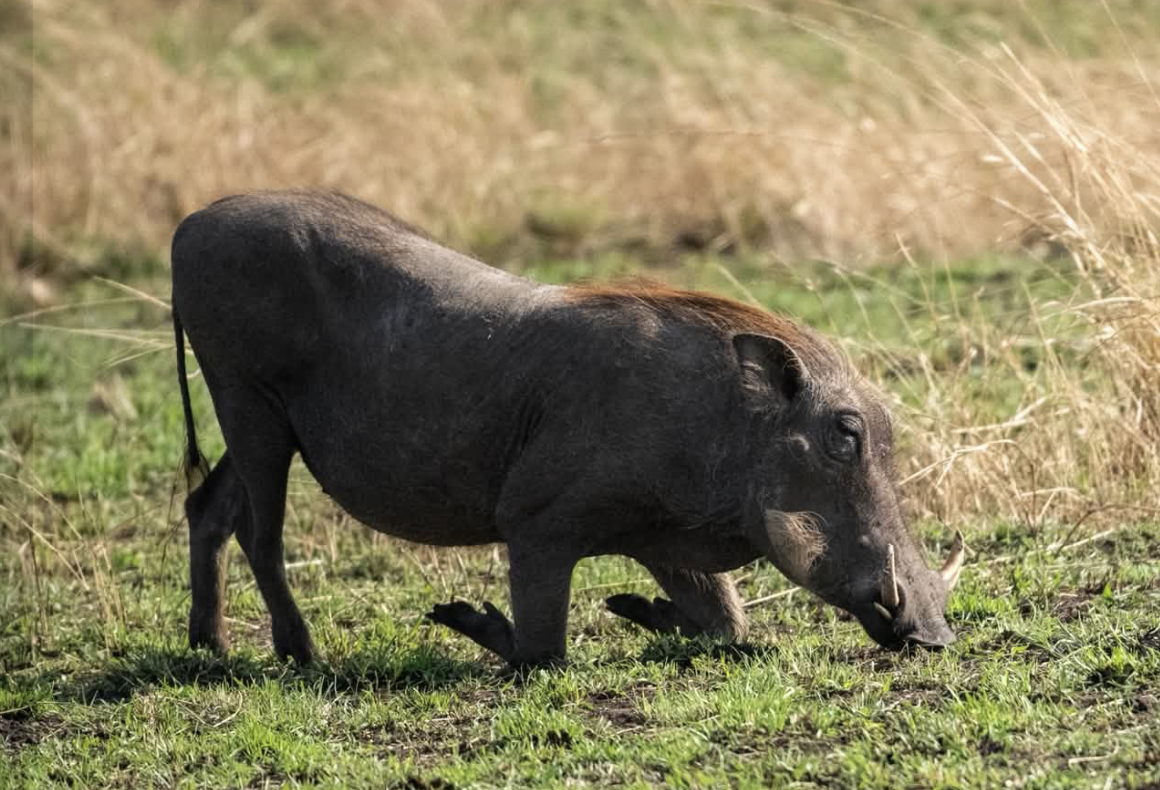
I was often not sure who the tourists really were. The “confusion” of wildebeest and the “gangs” of water buffalo stared at us as intently as we stared at them, especially the calves, which seemed to be trying to figure out what kind of creature we were. Lions and cheetahs napped around lone trees or draped themselves along branches, resting from their nighttime hunts. They either opened one eye to check us out or iignored us, having come to terms with the paparazzi.
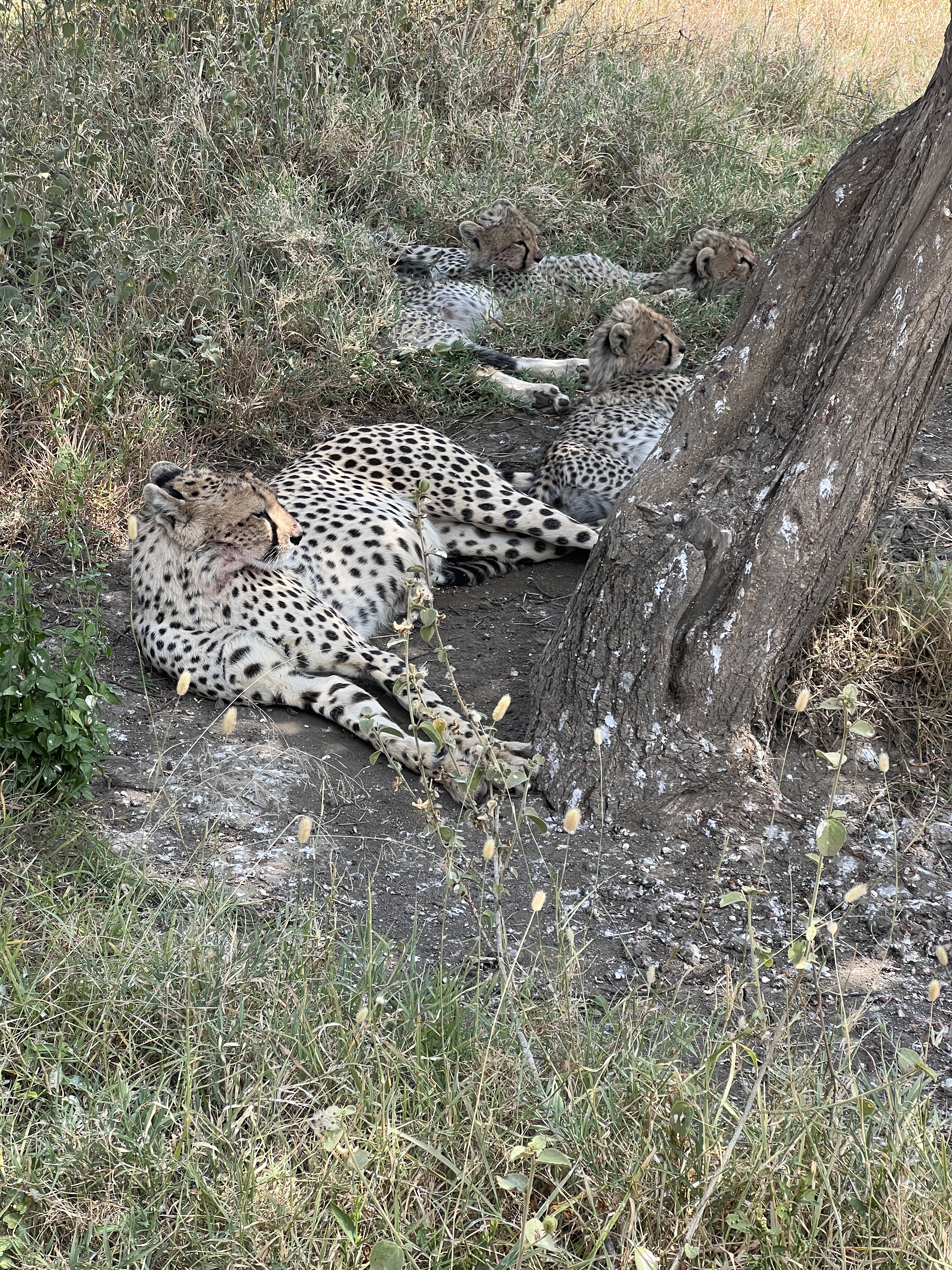
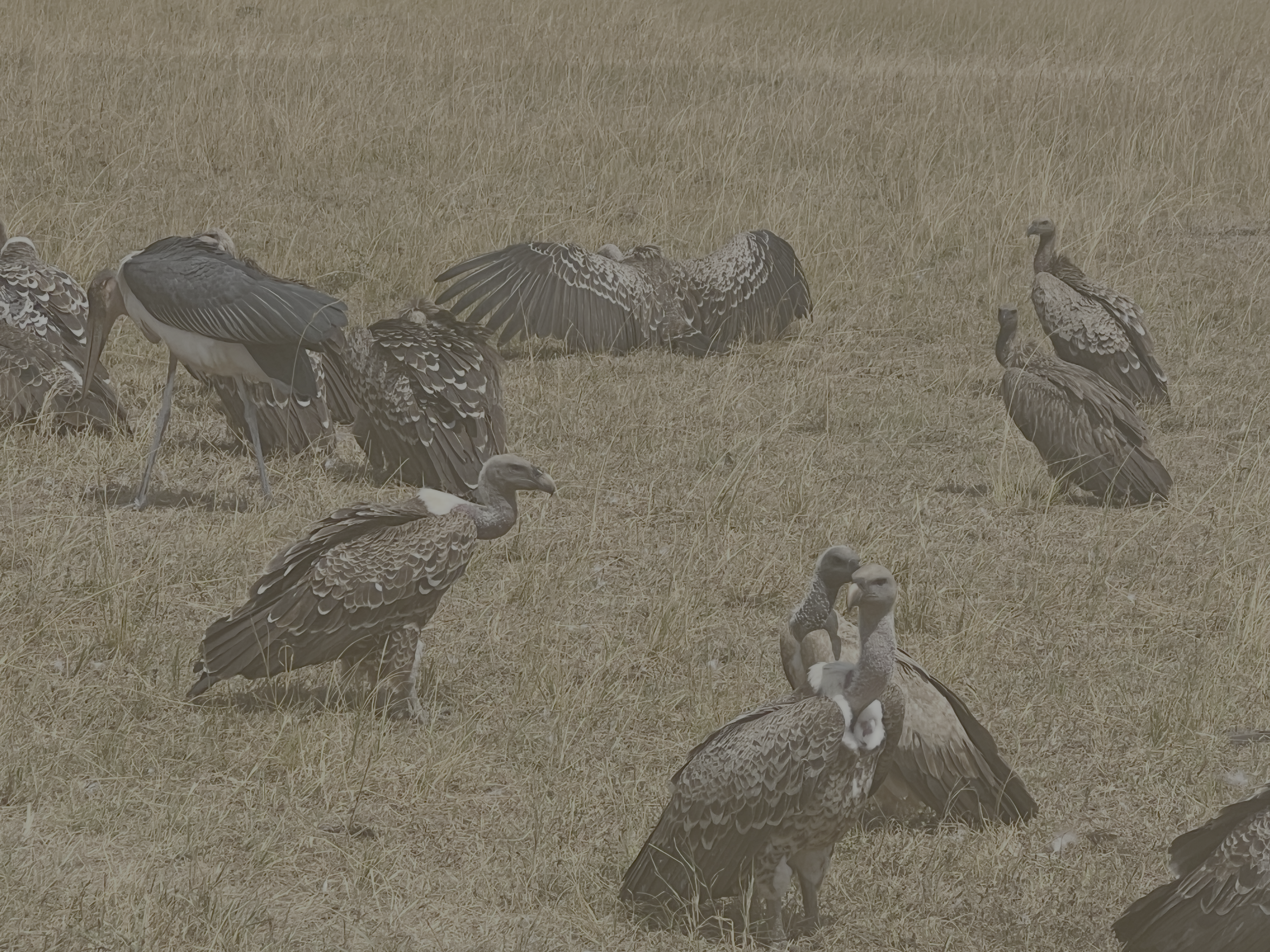
Nothing is wasted here. What is not eaten from a lion, leopard, or cheetah kill is consumed by hyenas, then jackals, and finally the vultures.
Sometimes animals decided to cross the road right in front of us. A “tower” of giraffes and a herd of elephants did this a couple of times.
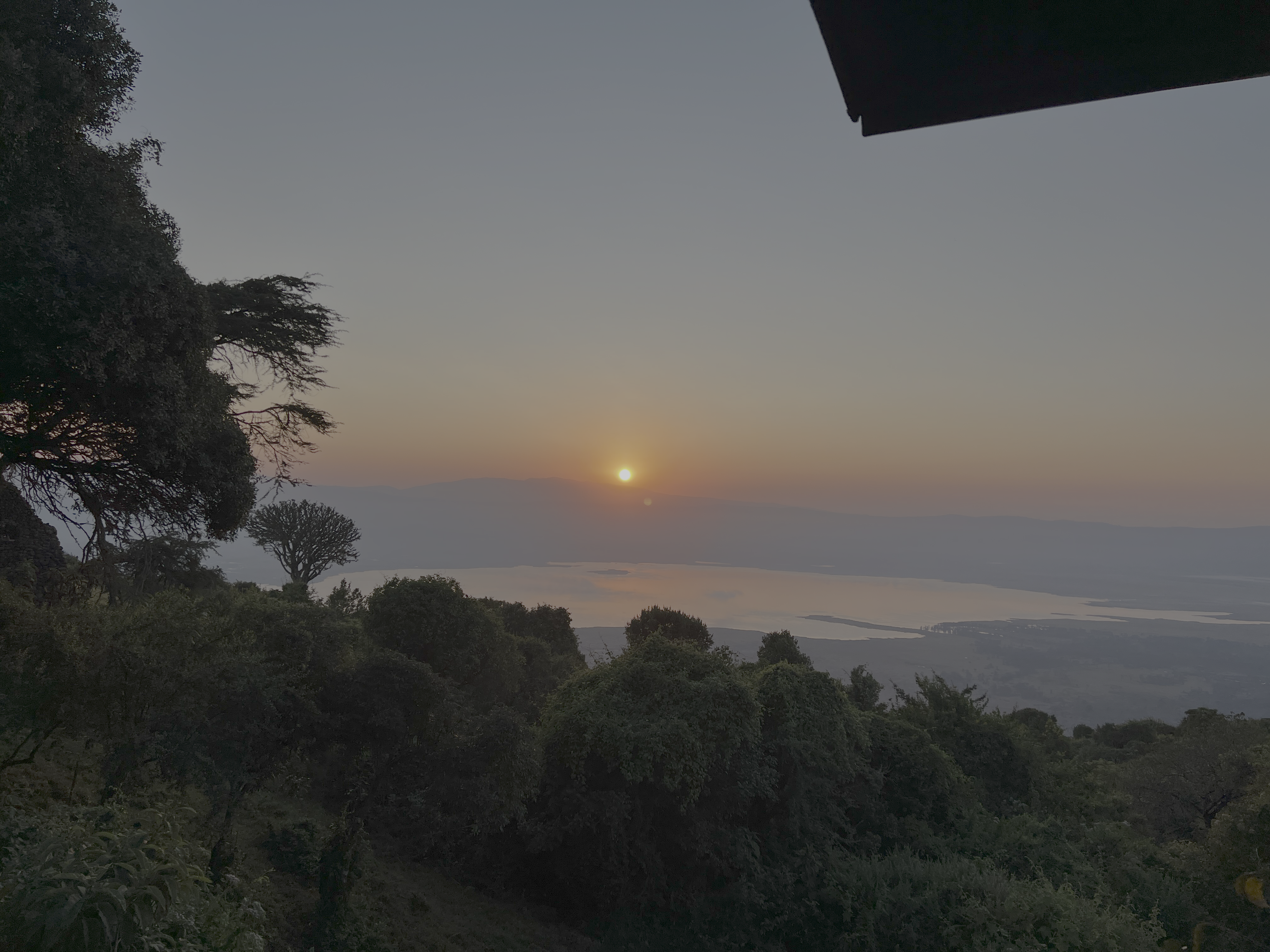
Most exciting was a morning in Tanzania’s Ngorongoro Crater, the world’s largest intact, unfilled volcanic caldera (12 miles across). Formed millions of years ago when a massive volcano erupted and collapsed. It is like a lost world, holding an entire ecosystem and thousands of animals.
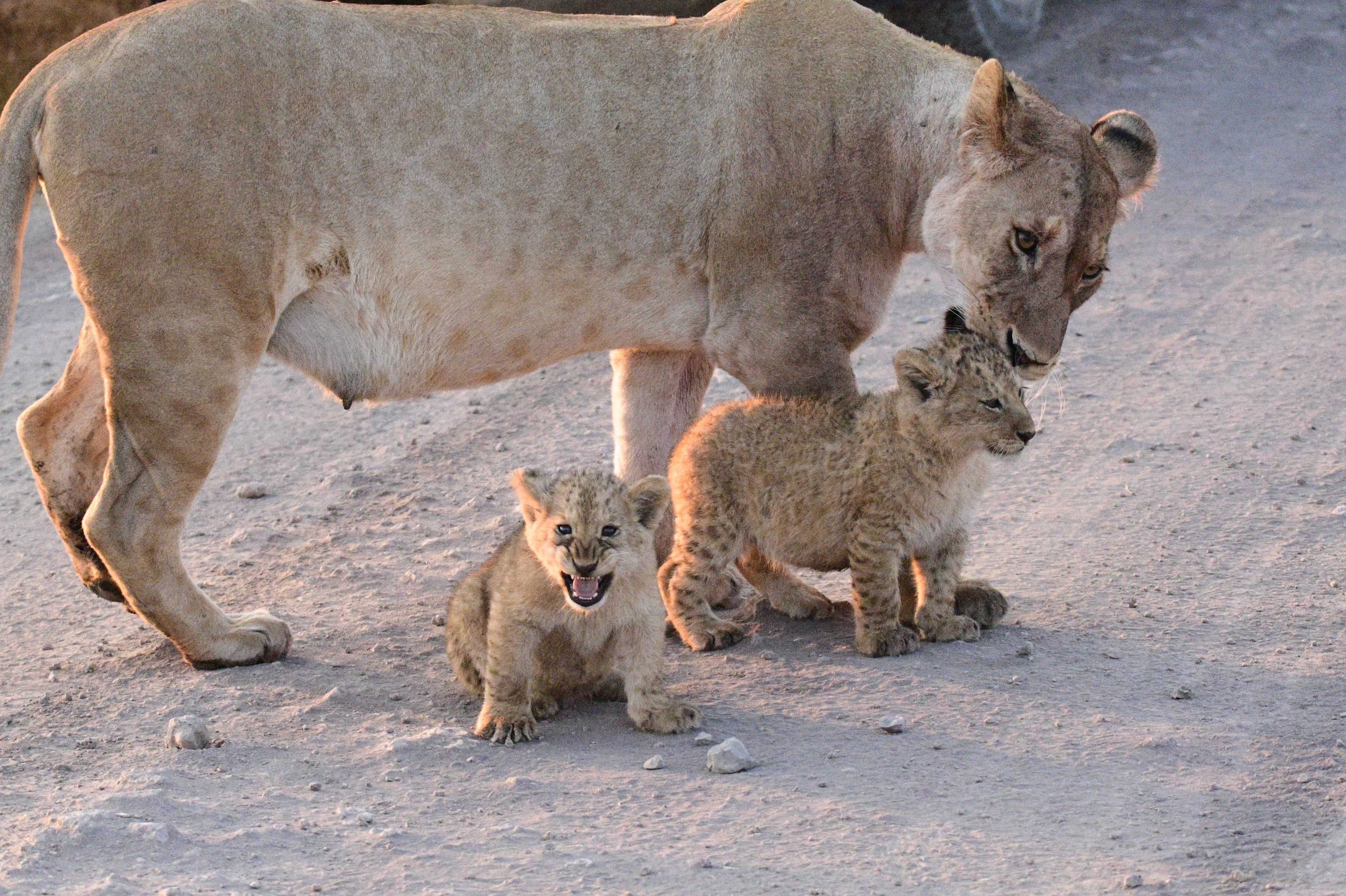
Just after sunrise in the caldera, a lioness and her two cubs crossed the road, stopping right in front of us. Mamma ended up picking up one confused cub and crossing the road with it. Its twin, the defiant one, only decided to follow when he realized everyone else was gone.
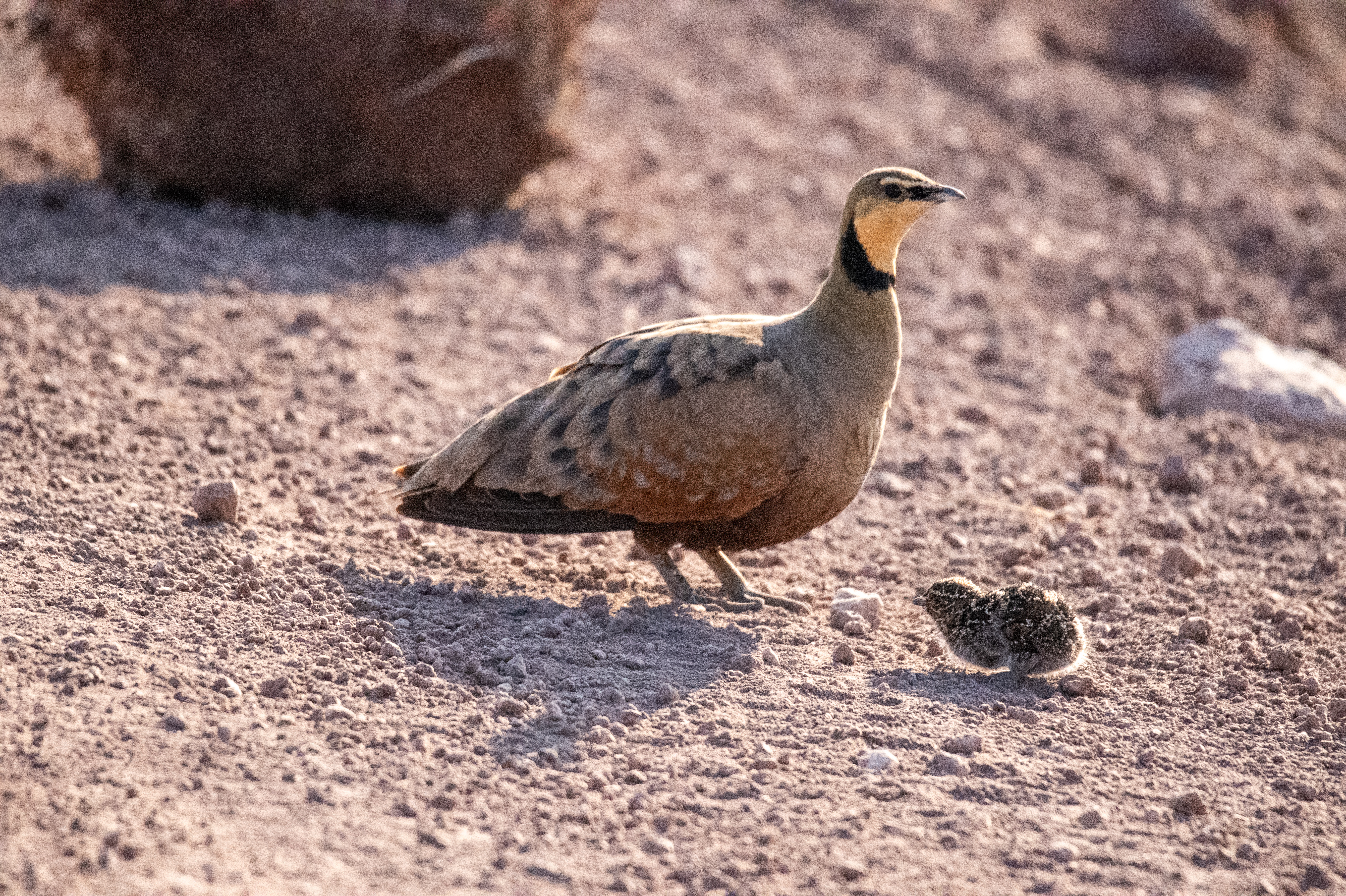
Despite all this around me, a banal moment—certainly not as exciting as lions in the road—but a powerful one nevertheless, hit me:
A guide in another vehicle jumped out to place a stone near the edge of the road. I had to ask what that was about. Our driver explained it was to keep other vehicles away from the road’s edge to protect a mother yellow-throated sandgrouse and her brood of tiny, well-camouflaged chicks. The caring in that small act touched me. We humans can be thoughtless hunters, or we can be protectors. The choices are the same all over the world.
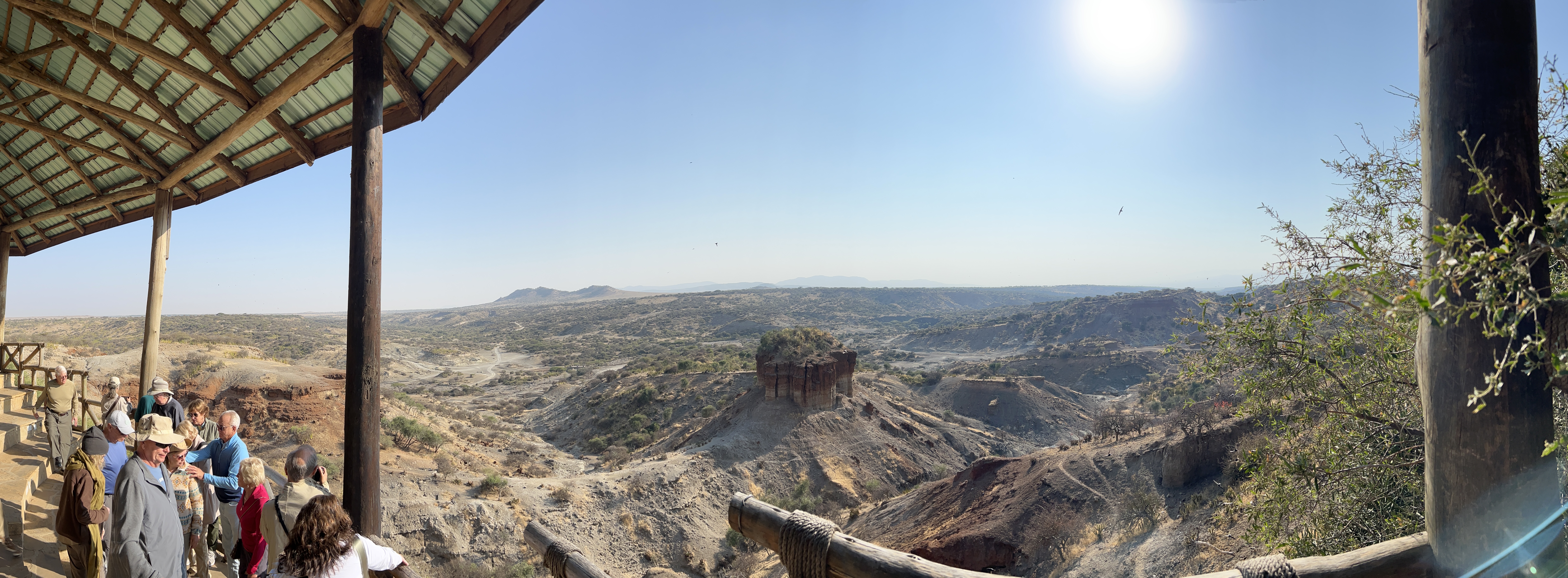
Speaking of humans, we visited Olduvai Gorge, part of the Great Rift Valley, known as the “Cradle of Mankind.” Like the savannahs, the seemingly still valley covers tremendous energies. Far below, the massive geologic plates are actively shifting, pulling Africa apart. Above that, for millions of years layer upon layer of ancient sediment holds on to humanity’s deep past. It was here that Louis and Mary Leakey helped change the story of where we came from, uncovering early hominin fossils and tools—including evidence of Homo habilis—that pushed our known family history farther back and pointed decisively to Africa as our birthplace. Standing there, I tried to imagine those distant ancestors moving through that landscape, carrying the first fragile sparks of being us.
A hot-air balloon ride in the Maasai Mara was a unique way to experience the vast herds of wildebeest that gather there during the Great Migration, their journey from Tanzania to Kenya in search of fresh grass and water.
My TIA perspective continued to evolve. When getting into or out of the rugged high vehicles, our driver would always place a stepstool on the ground (Did I mention I was in my eighth decade?) and offer a hand, along with the two-syllable “Pole, pole,” which means “Slowly, slowly.” At first, I thought they were mocking my time-consuming descent, but then I realized it was an offering of encouragement and reassurance. Watching the elephants move with ponderous, deliberate intent, I began to understand that slowness was not weakness or delay but its own kind of wisdom, a part of hakuna matata. For an elephant, just about anything in the path is “No Problem.” Pole, pole is a better way.
It was all wonderful, including the last days when we stayed in a tent. My fears about that were completely unfounded: the “tent” was a large, luxurious room with its own bathroom and shower within a fenced area guarded by security guards or red-cloaked Maasai warriors from the native tribes, armed with slingshots for the baboons (that threw nuts down on our tent roof) and strong flashlights.
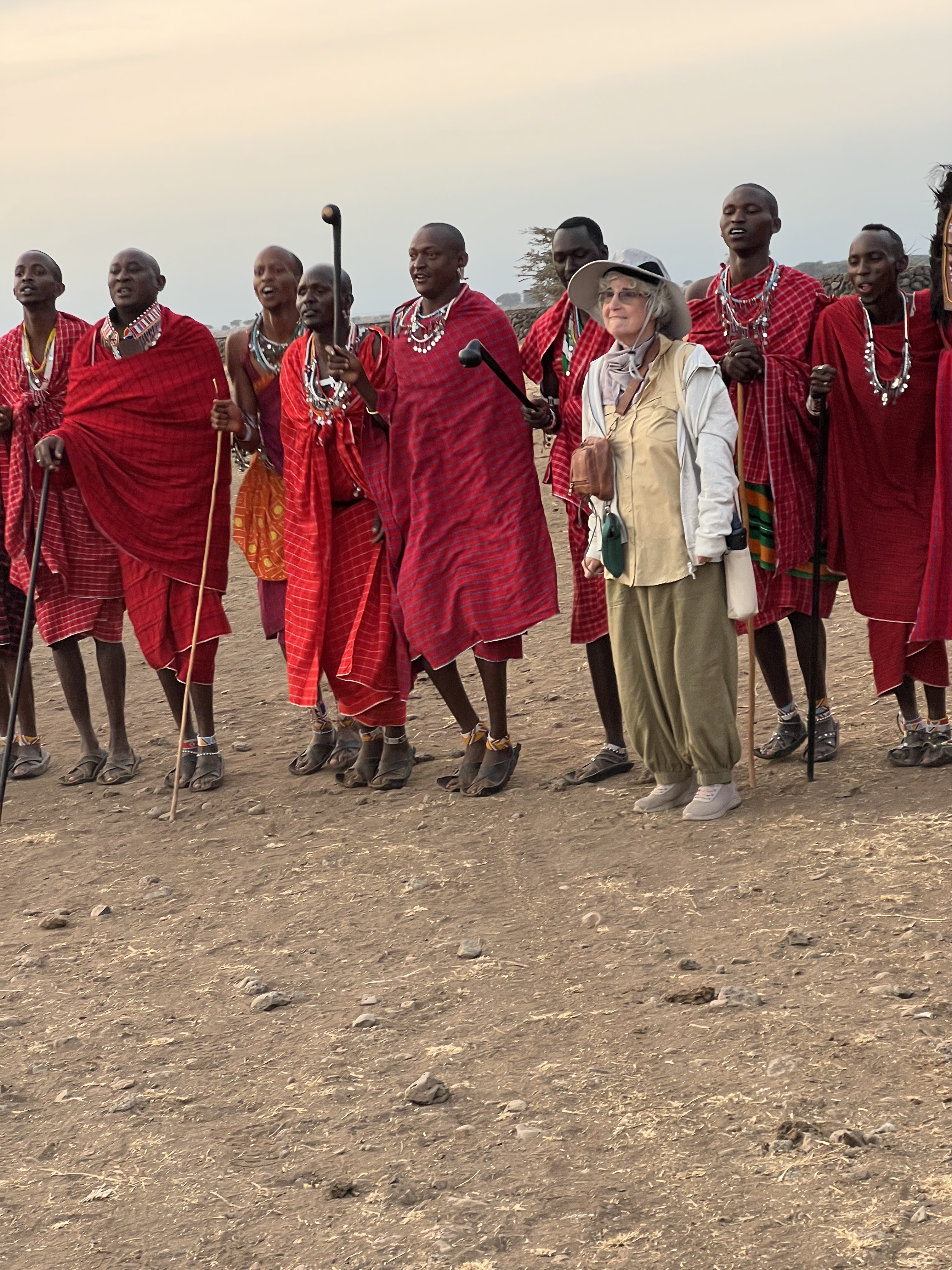
Photo courtesy of Roger Thorne
Apparently, guarding the tourist lodges is a good gig for them. For the most part, they live as their ancestors did on the savannahs, raising sheep and cattle and living off their blood and milk. But I did notice one of the Maasai guards in an off-duty moment consulting his smartphone. Cultural exchange is not a one-way street.
I am home, and life is settling back into its familiar rhythms, but Africa changed the tempo inside me. I have concepts to ponder, new friends, and memories I will treasure for however many years remain to me, along with a quieter confidence that wonder is still worth the risk. One day, I may be breathing my last, but I will know—I did go to Africa!

T.K. Thorne is a retired police captain (Birmingham, Alabama), former director of City Action Partnership, and an award-winning author of fiction and non-fiction.
I write about whatever sparks my curiosity — the things that make me pause, wonder, or mutter “well, that’s interesting…”.
While you’re here, feel free to look around my website and my books (I write across genres, so there’s likely something you didn’t expect).
If you arrived by way of my blog on Substack, here’s your breadcrumb trail home.
If you slipped in through The Stiletto Gang, here’s the door you came through.
Discover more from T. K. THORNE
Subscribe to get the latest posts sent to your email.


Wonderful!
Awesome photos! So many adventures you’ve had!
Magnificent!
Going on a trip to Africa seeing animals sounds interesting and fun
What a wonderful account of your journey! Thank you, T. K.! I really enjoyed it
I loved reading this post. It brought back several wonderful memories. I took a very similar trip to Africa in 1992. I’d just read “Out of Africa” and was excited about taking the trip. I’m so glad you were able to do this!
What a wonderful account of your trip. The photos are fabulous! I so admire your courage and sense of adventure. Thank you for sharing your excursion.
Thanks for the note, Marianne! I appreciate you sharing that.
Me too, Kathleen! It was quite an experience! I don’t think I mentioned this but we got to tour Karen Blixen’s home and property in Nairobi. Fascinating!
Thanks Ginny! Glad you enjoyed!
It was both interesting and fun! A good combo for a trip!
Thanks, Walt. It was good to see you at AWC conference!
Plan to keep having them, although they don’t have to all be so far away! It was great to finally get to see you and spend some time with you!
glad it was fun & interesting